A personal reflection on recognition, attachment and emotional discernment.


Written by Sarah ‘Sy’ Taylor
Former First Responder – Trauma-Informed Writer – Founder of The Inner Growth Path
Rebuilding identity after emotional collapse
THE SHORT ANSWER
What Does Soul Recognition After Separation Mean?
Soul recognition after separation can describe experiencing a deep sense of familiarity, emotional resonance or recognition with someone new after an important relationship or marriage has ended.
The experience may challenge the belief that you can have only one soulmate or one profound connection in your lifetime. It can also reveal that your capacity to feel deeply, recognise emotional alignment and connect authentically did not disappear with the relationship you lost.
However, soul recognition does not automatically establish that the new person is a life partner. It does not guarantee compatibility, mutual capacity, permanence or a relationship that should be pursued.
Sometimes the recognition is meaningful because of what it awakens within you—not because of how long the person remains in your life.
For me, understanding this distinction did not make the connections less meaningful. It helped me stop asking every moment of recognition to prove that I had found another permanent partner.
A PERSONAL EXPERIENCE
What Soul Recognition Feels Like for Me
When people talk about soul recognition, they often describe fireworks, destiny or instantly “knowing” someone.
My experience has been quieter, but no less powerful.
It can feel like familiarity without shared history. There may be an unexpected emotional ease or a sense of being seen without needing to perform. The feeling is not always excitement. Sometimes it is recognition mixed with calm and depth.
There is often a softness to it. A remembering. A sense that something inside me is being reflected back.
It feels less like discovering a completely unknown person and more like recognising something I already understood somewhere beneath language.
But this is important: the feeling does not mean that I already know the person.
It does not reveal their character, emotional capacity or ability to participate in a healthy relationship. Those things can only become visible through time, communication and consistent behaviour.
Recognition may happen in a moment. Trust and compatibility must be demonstrated over time.
For Me, It Can Feel Like:
The feeling can be real without telling me what the relationship will become.
“Recognition may happen in a moment. Trust and compatibility must be demonstrated over time.”
— Sy Taylor
Learning to separate the feeling of recognition from a prediction about the future required me to reconsider what I had believed throughout my marriage.
If you are looking for a broader explanation of the experience, including its commonly reported signs and possible psychological influences, begin with my guide to what soul recognition means.
A BELIEF I HAD TO UNLEARN
The Belief I Had to Unlearn After My Marriage
For a long time, I carried an unconscious belief that soul recognition meant life partnership.
If two people recognised each other at that depth, I assumed they were meant to remain together. The connection itself seemed like proof of permanence.
My marriage reinforced that belief—until it did not.
The end of the relationship did not erase the years we shared or make the love meaningless. But it forced me to confront something I had never expected:
A relationship can feel deeply significant and still end.
After separating, I experienced other moments of connection that felt just as real and resonant, yet were clearly not meant to become permanent relationships.
At first, that was confusing. It challenged the framework I had used to understand love.
If my former wife had been my soulmate, how could I recognise something profound in someone else?
If the new recognition was real, did that mean I had misunderstood my marriage?
Eventually, I realised I was asking the experience to fit inside a definition that had become too small.
Perhaps recognition did not have to identify one person as my permanent destination. Perhaps different people could awaken, reflect or reveal different parts of me at different stages of my life.
That did not make any of the connections false.
It changed what I believed their truth had to prove.
What I Once Believed
- There is only one true soulmate.
- Recognition means two people are meant to remain together.
- If the relationship ends, I must have misunderstood the connection.
- Recognising someone new threatens the meaning of the love that came before.
What I Understand Now
- More than one connection can be deeply meaningful.
- Recognition does not guarantee permanence.
- A relationship ending does not make its love or significance false.
- A new connection does not erase or invalidate the past.
“Soul recognition does not promise longevity. It reveals awareness.”
— Sy Taylor
Once I stopped treating recognition as proof of permanence, I could begin to understand what these connections might offer without asking every one of them to become a relationship.
RECOGNITION WITHOUT OBLIGATION
Soul Recognition Is Not a Contract
One of the most grounding lessons I have learned is that recognising someone deeply does not create a promise between you.
It does not mean they are meant to become your partner. It does not guarantee that they have the emotional capacity to meet you, that your lives are compatible or that the connection is meant to continue.
Sometimes the recognition is meaningful because of what it allows you to see—not because of what the relationship eventually becomes.
A MIRROR
A connection may reflect a part of yourself you had forgotten, hidden or stopped trusting.
A REMINDER
It may remind you that your heart is still open and that your capacity for connection survived what you lost.
A CLARIFICATION
It may help you recognise what emotional alignment feels like—and what you are no longer willing to mistake for it.
Some connections arrive as mirrors. Others feel like teachers, reminders or brief moments of recognition between two people whose paths happen to cross.
That does not make them insignificant.
But significance and permanence are not the same thing.
I can honour what a connection awakened in me without deciding that I must keep the person, pursue a relationship or wait for the experience to become something more.
Sometimes the most honest way to respect a meaningful connection is to receive what it revealed—and allow it to remain what it was.
A meaningful connection does not owe me a relationship.
I can trust that the recognition was real while remaining honest about what the person can actually offer, what the circumstances allow and whether the connection supports the life I am building.
The challenge, then, is not deciding whether the recognition was real. It is learning how to respond to it without allowing intensity to make the decision for me.
DISCERNMENT OVER INTENSITY
Discernment Is Part of Spiritual Maturity
One of the hardest and most grounding lessons I have learned is that not every meaningful connection needs to be pursued.
Some connections may be meant to be felt and released. Others may show us something important about ourselves without having the capacity to become a healthy, lasting relationship.
Discernment does not deny the connection. It helps us respond to it without allowing intensity, hope or longing to decide what it must mean.
Earlier in my healing, I was more likely to treat the depth of a connection as evidence that I needed to do something with it.
I wanted to understand it, define it and work out where it was leading. If the feeling was unusual or profound, it seemed as though it must be pointing towards a particular future.
I understand that impulse. When something reaches us deeply, uncertainty can feel almost impossible to tolerate.
But I have learned that the feeling itself is only one piece of information.
The person’s behaviour matters. Their emotional availability matters. Mutuality matters. Timing, circumstances and the effect the connection has on my nervous system all matter.
A connection can feel spiritually significant while still being unavailable, inconsistent or incompatible with the life I am trying to build.
Discernment asks me to hold both truths at once: the experience may be meaningful, and pursuing it may still not be right for me.
BEFORE I ASSIGN MEANING
Questions I Ask Myself
1. Does this connection support my nervous system?
Do I feel grounded, safe and able to remain myself—or am I becoming increasingly anxious, preoccupied or dysregulated?
2. Is there mutual capacity, not just chemistry?
Can both people communicate, show up consistently and make room for the connection in real life?
3. Does it align with the life I am actually building?
Does this relationship support my values, boundaries and future—or require me to abandon them?
4. Am I responding from wholeness or from longing?
Am I choosing the person as they are, or hoping the connection will repair an old wound, end my loneliness or confirm that I am still wanted?
Recognition tells me that something has been awakened. Discernment helps me decide what deserves access to my life.
I no longer need to dismiss a connection to make a grounded decision about it. I can acknowledge its meaning while still choosing consistency, mutuality and emotional safety.
Intensity can sometimes make attachment feel like proof of love. If you are trying to understand the difference, read Attachment vs Love: How to Tell What You’re Really Feeling.
Learning discernment has not made me less open to connection. It has allowed me to remain open without giving every powerful feeling authority over my future.
CONNECTION AFTER SEPARATION
Why Soul Recognition Can Feel Stronger After Separation
After a long relationship or marriage ends, a new connection can feel unusually vivid.
That does not necessarily mean the experience is imagined, nor does it prove that the person is destined to become your next partner. It may partly reflect the emotional and identity changes taking place as you begin to emerge from the life you previously knew.
When my marriage ended, I was not simply losing a relationship. I was losing the shared identity, routines, assumptions and future that had grown around it.
For a time, so much of my emotional world was organised around what had ended. I was grieving the person, but I was also trying to understand who I was outside the life we had built.
As the self begins to re-emerge after separation, moments of connection can feel especially powerful. Being seen by someone new may reach a part of you that has felt dormant, rejected or uncertain. Emotional resonance can feel like evidence that something inside you is returning to life.
That was part of what these experiences represented for me.
They did not erase what I had shared with my former wife. They showed me that my capacity for connection had not ended with the marriage.
I was still capable of openness. I could still feel resonance. Parts of me that had become quiet were beginning to respond again.
The connection may have been real—but the context in which I experienced it also mattered.
WHY IT MAY FEEL SO POWERFUL
1. Your identity is re-emerging
A new connection may reflect qualities, desires or possibilities that became quiet within your previous relationship.
2. The contrast feels significant
After grief, loneliness or emotional disconnection, being understood can feel especially vivid and restorative.
3. Familiarity creates meaning
Something about the person may feel emotionally familiar, resonant or aligned with an important part of your inner world.
4. Connection restores hope
The experience may remind you that love, openness and emotional possibility still exist beyond what ended.
NOTICE
The intensity of a connection does not, by itself, explain what the connection is or what you should do with it.
It may contain attraction, emotional familiarity, attachment, genuine compatibility, spiritual meaning—or several of these at once. You do not need to force one explanation before time and behaviour reveal more.
When a relationship has shaped your identity, its ending can leave you unsure of who you are outside it. Read Identity Loss After Trauma: Why You Don’t Feel Like Yourself to understand how identity can begin to rebuild.
For me, these experiences eventually became less about identifying who was “meant for me” and more about recognising the parts of myself that were becoming available again.
WHERE I AM NOW
Open to Connection, Without Forcing Its Meaning
I am currently single and open—curious about connection, but more grounded in how I respond to it.
I no longer need to decide immediately what a connection means or where it is going. I can allow myself to feel it without forcing it into a story that the circumstances, the other person or the relationship cannot sustain.
That does not mean I have become guarded or cynical.
I still believe some people meet us with an unusual depth of recognition. I still value the moments when something within me feels seen, remembered or awakened.
The difference is that I no longer treat the feeling as the complete answer.
I let time reveal character. I look for mutual capacity rather than relying on chemistry alone. I pay attention to whether I can remain grounded, honest and fully myself.
And I allow a connection to be meaningful even when it does not become permanent.
WHAT THIS LOOKS LIKE FOR ME NOW
FEEL
I allow myself to experience the connection without dismissing it.
OBSERVE
I pay attention to behaviour, consistency and emotional capacity.
WAIT
I give time the opportunity to reveal what intensity cannot.
CHOOSE
I decide according to my values, safety and the life I am building.
“Soul recognition does not mean, ‘This is my person.’
It means something in me is awake enough to notice resonance.”
— Sy Taylor
That awareness feels like healing—not because it promises me another relationship, but because it shows me that the end of my marriage did not close the part of me capable of recognising and receiving connection.
A PAUSE FOR REFLECTION
A Gentle Reflection for You
If you have experienced a connection like this after a breakup or separation, you are not strange, naive or “too spiritual.”
You may be discovering that your ability to connect did not disappear with the relationship that ended. You may also be learning how to honour what you feel without asking the feeling to predict your future.
You do not need to dismiss the experience or immediately define it. You can remain curious while allowing time, behaviour and your own self-trust to reveal more.
QUESTIONS TO CONSIDER
What Might This Connection Be Showing You?
What am I actually recognising?
Is it the person as I know them now—or a feeling of familiarity, possibility or emotional resonance?
What has this connection awakened in me?
Has it revealed a need, quality, desire or part of myself that I want to understand more deeply?
What has the person’s behaviour shown me?
Is there consistency, emotional availability and mutual effort—or am I relying mainly on the intensity of the feeling?
If this never became a relationship, what would still be meaningful about it?
What could I receive, learn or reclaim without needing the person to remain?
You do not need to answer every question today.
Notice which one creates the strongest response. That may be the place where the connection is asking you to become more honest with yourself.
Sometimes the lesson is not about who stays.
It is about who you are becoming.
RECOMMENDED NEXT STEP
Understand What the Connection Is Activating in You
If a connection has left you questioning what it means, the next step is not necessarily to decide whether it is destiny.
It may be more helpful to understand what the experience is activating: attachment, emotional familiarity, old relationship patterns, unmet needs, returning parts of your identity—or genuine compatibility that can be tested through time and behaviour.
Stage 2: Understand will help you explore these patterns without dismissing what you feel or allowing the feeling to make every decision for you.
STAGE 2 CAN HELP YOU EXPLORE
If the separation feels too overwhelming to analyse right now, begin with Stage 1: Stabilise and focus on creating safety before trying to understand everything.
COMMON QUESTIONS
Frequently Asked Questions About Soul Recognition After Separation
Soul recognition is a personal and spiritual concept rather than a mental-health diagnosis. If a connection is causing persistent distress, disrupting daily life or making it difficult to respect your own or another person’s boundaries, consider speaking with a qualified mental-health professional.
ABOUT THIS ARTICLE
Sources and Perspective
A Note on Lived Experience and Research
This article is written from my lived experience of marriage, separation, identity disruption and the unexpected connections I experienced afterwards.
I use the term soul recognition to describe a personal sense of familiarity, resonance or meaningful connection. It is a spiritual or reflective description—not a clinical diagnosis or a phenomenon that psychological research can confirm.
The research below informs the article’s discussion of relationship loss, attachment, self-concept and emotional adjustment. It does not establish that a connection is spiritually destined or determine what any particular relationship means.
— Sy Taylor
Research Referenced
- Slotter, Gardner and Finkel (2010) — Who Am I Without You? The Influence of Romantic Breakup on the Self-Concept. This research found an association between romantic breakup and reduced self-concept clarity. View the study on PubMed.
- Whisman, Salinger and Sbarra (2022) — Relationship Dissolution and Psychopathology. This review examines associations between relationship dissolution and mental-health symptoms, while noting the complexity of causation and individual differences. View the review on PubMed.
- Lewandowski and Bizzoco (2007) — Addition Through Subtraction: Growth Following the Dissolution of a Low-Quality Relationship. This research explores the possibility of personal growth after relationship dissolution. View the journal article.
This article is provided for reflection and general information. It is not intended to diagnose a mental-health condition or replace individual advice from a qualified professional.
RELATED READING
Continue Your Path
If this article helped you understand the connection differently, these guides can help you explore the relationship patterns, identity changes and disconnection that may sit underneath it.
RELATIONSHIP PATTERNS
Why Do Relationships End? Three Hidden Patterns
Understand the quieter patterns that can erode connection long before a relationship visibly ends.
IDENTITY AFTER TRAUMA
Identity Loss After Trauma: Why You Don’t Feel Like Yourself
Explore why trauma and relationship loss can disrupt your sense of identity—and how the self begins to return.
RECONNECTING WITH YOURSELF
Why You Feel Disconnected From Yourself After Trauma
Recognise the emotional, physical and relational forms of disconnection that can follow overwhelming experiences.
Not sure which article fits? Begin with the Identity Rebuild Path and choose the stage that reflects what you need now.
IF THE SEPARATION FEELS OVERWHELMING
You Do Not Have to Understand Everything Today
If the separation has left you emotionally overwhelmed, replaying what happened or struggling to manage ordinary tasks, understanding the connection may not be the first thing your system needs.
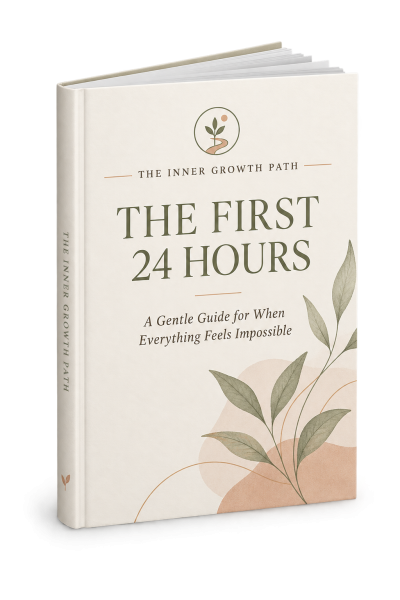
The Free 24-Hour Emotional Recovery Starter Guide will help you reduce immediate pressure and focus on the next manageable step.
It will not ask you to “move on,” find closure or make major decisions. It offers gentle, practical support for getting through the first difficult hours when everything feels like too much.
Start with what feels manageable. One small step is enough.