

Written by Sarah ‘Sy’ Taylor
Former First Responder – Trauma-Informed Writer – Founder of The Inner Growth Path
Rebuilding identity after emotional collapse
Why Relationships Can End Even When Love Still Exists
Why do relationships end when love still exists? After a breakup, the mind often searches for one conversation, one mistake or one moment that explains everything. But some relationships do not end because of a single event. Connection can weaken gradually through patterns that become normal long before either person recognises their impact.
This article explores three patterns that can contribute to that disconnection: emotional safety disappearing, love becoming performance and repair no longer happening after conflict.
I have encountered these patterns through my own relationships and during my years as a police officer responding to families in crisis. They do not explain every relationship, and recognising one does not diagnose either partner or prove that a relationship should end. They are starting points for understanding what may have changed.
Understanding cannot rewrite the past. It can, however, help you replace confusion and self-blame with clearer observation—and make more informed choices about what you want to carry into future relationships.
How Connection Can Quietly Weaken
The beginning is rarely dramatic. One conversation feels less safe. One need remains unspoken. One apology never arrives. One person compromises again because raising the issue feels harder than staying silent.
A single moment may appear insignificant. Repeated over time, however, these interactions can change the emotional climate of a relationship. Honesty becomes self-protection, compromise becomes self-abandonment and conflict stops leading to repair.
The following three patterns help make that gradual process easier to recognise.
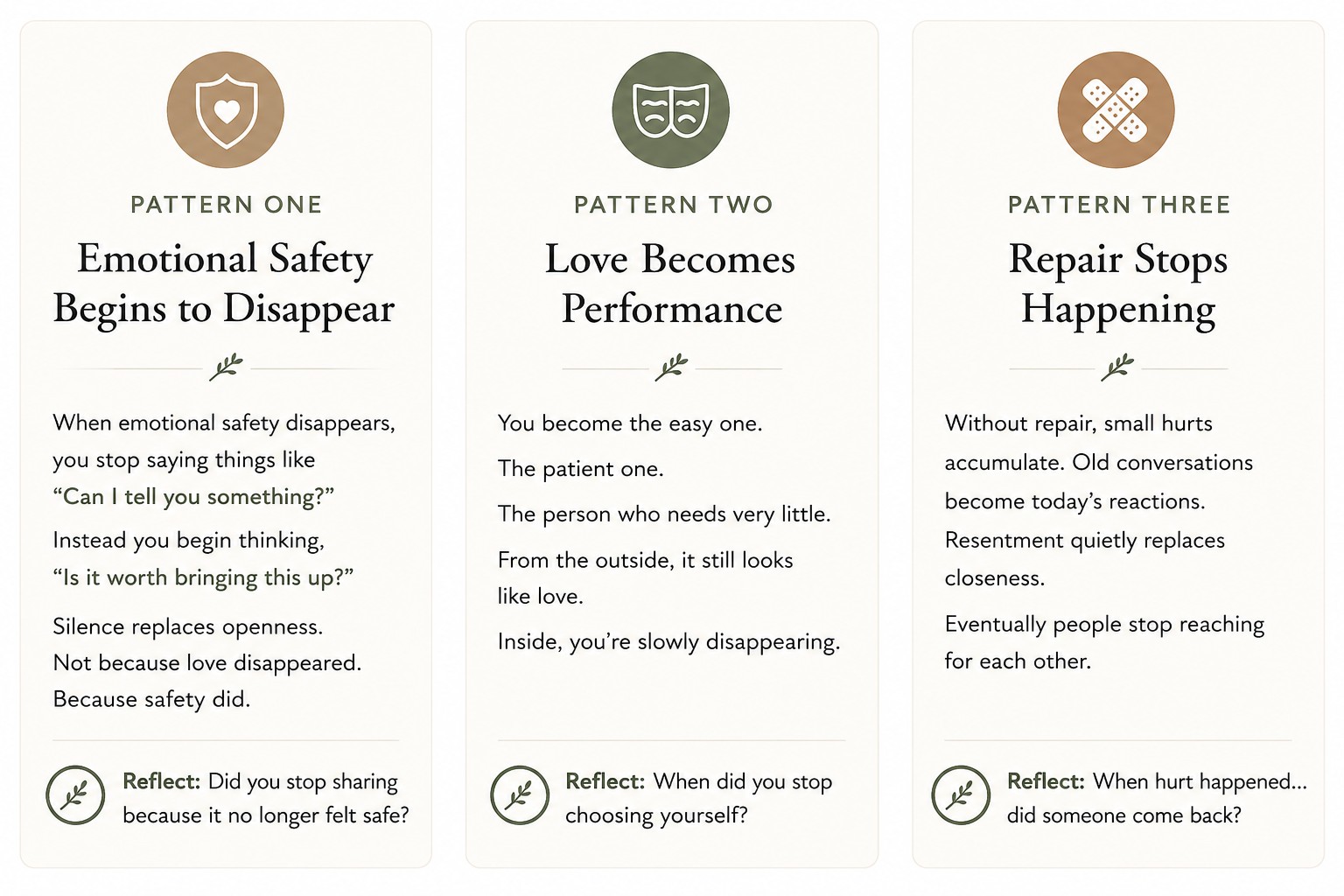
Pattern 1: Emotional Safety Begins to Disappear
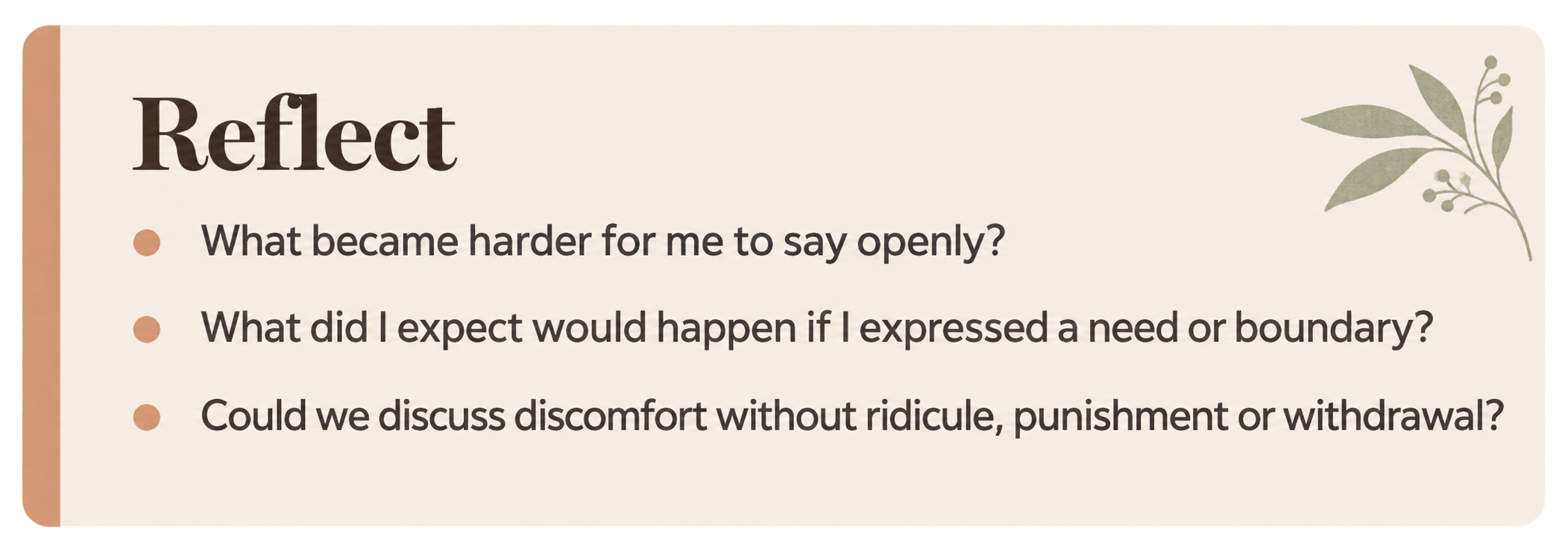
Emotional safety does not mean always agreeing, avoiding difficult conversations or protecting each other from accountability. It means being able to express a feeling, concern, boundary or mistake without expecting ridicule, punishment, intimidation or prolonged withdrawal.
When that safety begins to weaken, communication changes. Instead of asking, “Can I tell you something?” you may begin wondering, “Is bringing this up worth what will happen afterwards?”
You might:
- Rehearse ordinary conversations before having them.
- Soften your needs until they no longer sound like needs.
- Hide disappointment to avoid an argument.
- Agree simply to restore peace.
- Monitor your partner’s mood before deciding whether you can speak.
- Stop sharing parts of yourself that previously felt welcome.
This does not automatically mean the other person is intentionally unsafe. Previous betrayal, abandonment or conflict can also make present-day disagreement feel threatening. What matters is whether both people can approach that reaction with curiosity, responsibility and a willingness to create greater safety.
If honesty repeatedly leads to punishment, dismissal or escalation, silence may begin to feel safer than openness. The relationship may still contain love, but it has less room for either person to be fully known.
Pattern 2: Love Becomes Performance
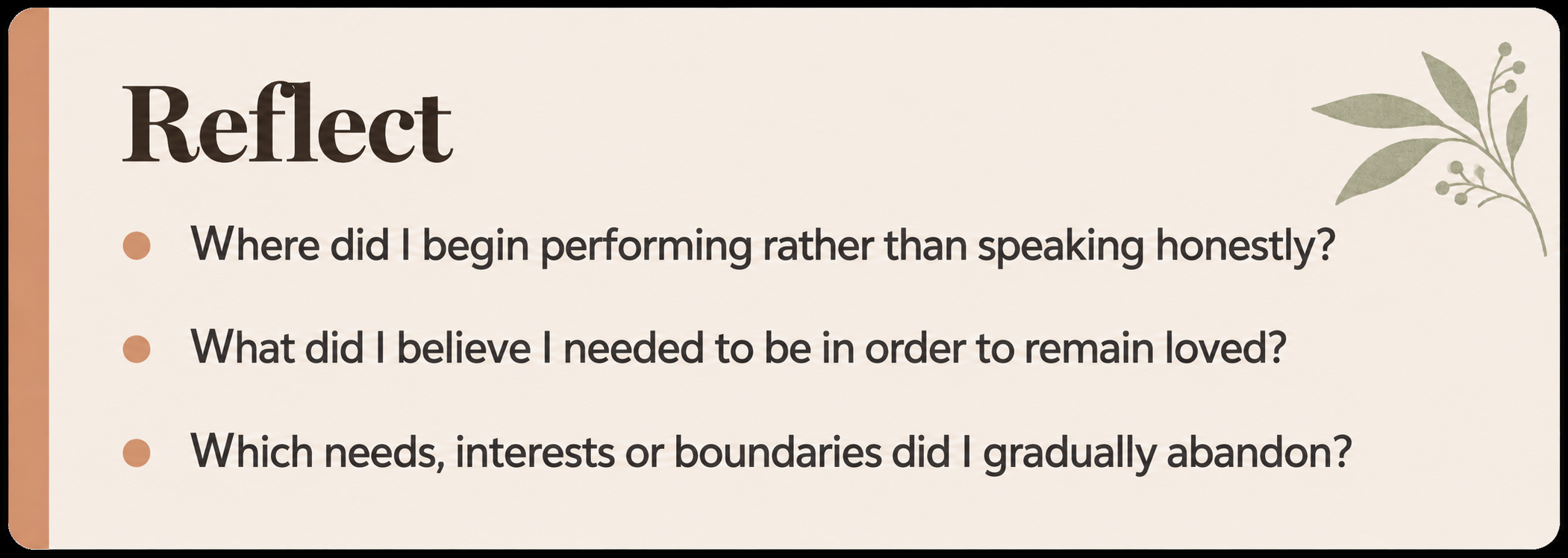
Compromise is a normal part of a relationship. Performance begins when you repeatedly suppress your needs, preferences or personality because you believe being easier to love will keep the relationship secure.
You may become the patient one, the understanding one or the person who appears to need very little. You anticipate what will keep the other person comfortable and gradually stop asking what feels true for you.
Signs of this pattern can include:
- Saying yes when you want to say no.
- Taking responsibility for both people’s emotions.
- Hiding needs that may be considered inconvenient.
- Measuring your worth by how useful or undemanding you can be.
- Feeling guilty when you rest, set a boundary or disappoint someone.
- Losing touch with interests and relationships outside the partnership.
I know how easy it can be to confuse endless understanding with loving well. But love that requires one person to continually disappear is not creating genuine closeness. The other person is relating to the version of you performing stability—not necessarily the whole person underneath it.
Over time, this can produce exhaustion and resentment. You may remain deeply committed to the relationship while feeling increasingly disconnected from yourself.
If you are questioning whether love was enough to sustain the relationship, read Why Love Isn’t Enough in a Relationship—and Why That Doesn’t Mean It Failed.
Pattern 3: Repair Stops Happening
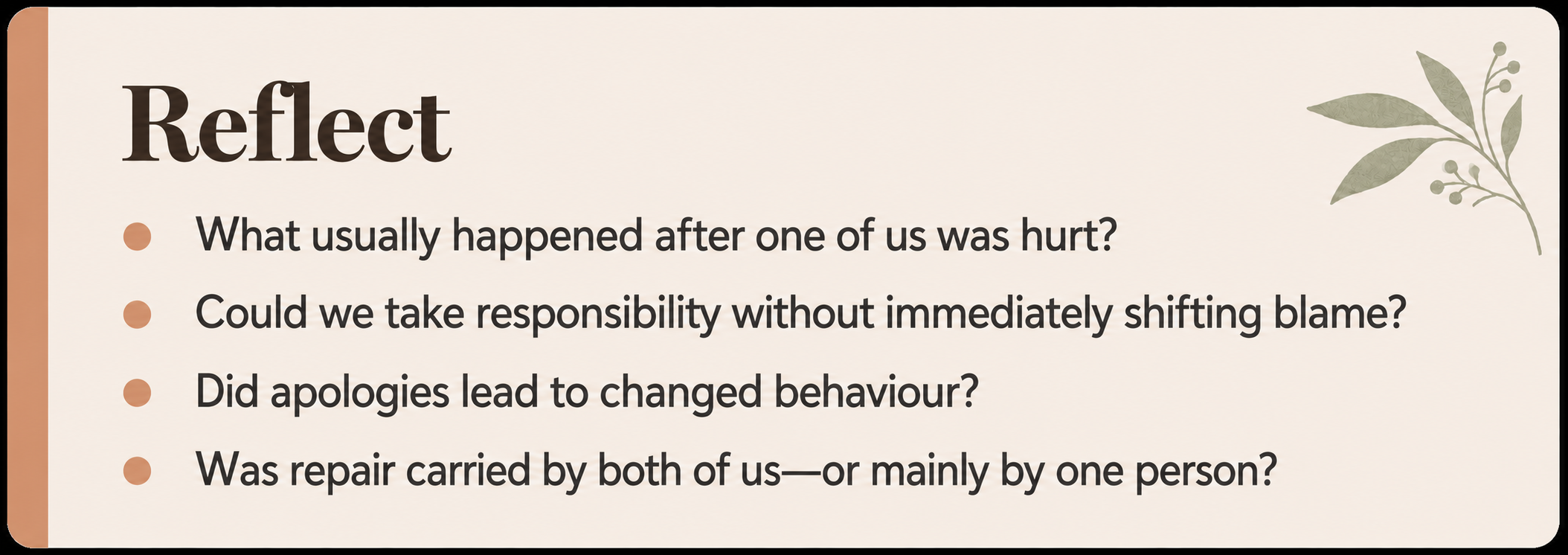
Conflict does not automatically mean a relationship is unhealthy or failing. The more useful question is what happens after someone has been hurt.
Repair is the process of returning to the conversation with enough honesty and care to understand the impact, take responsibility and decide what needs to change. It may include:
- Listening without immediately defending yourself.
- Acknowledging the other person’s experience.
- Apologising for the specific harm rather than merely ending the argument.
- Following the apology with different behaviour.
- Reassuring each other that disagreement does not threaten the entire relationship.
Without repair, small injuries accumulate. A current disagreement begins carrying the emotional weight of every earlier conversation that never felt resolved. Resentment grows, trust weakens and eventually one or both people stop reaching for connection.
An apology alone is not repair if the same behaviour continues without reflection or change. Nor can one person repair a relationship on behalf of both people. Repair requires mutual participation.
Sometimes people stop trying because they no longer care. Sometimes they stop because repeated failed attempts have taught them that returning to the conversation will not create anything different.
If you are struggling to distinguish secure connection from fear, dependency or emotional intensity, read Attachment vs Love: 7 Signs It’s Not Actually Love.
How These Patterns Reinforce Each Other
These patterns rarely remain separate.
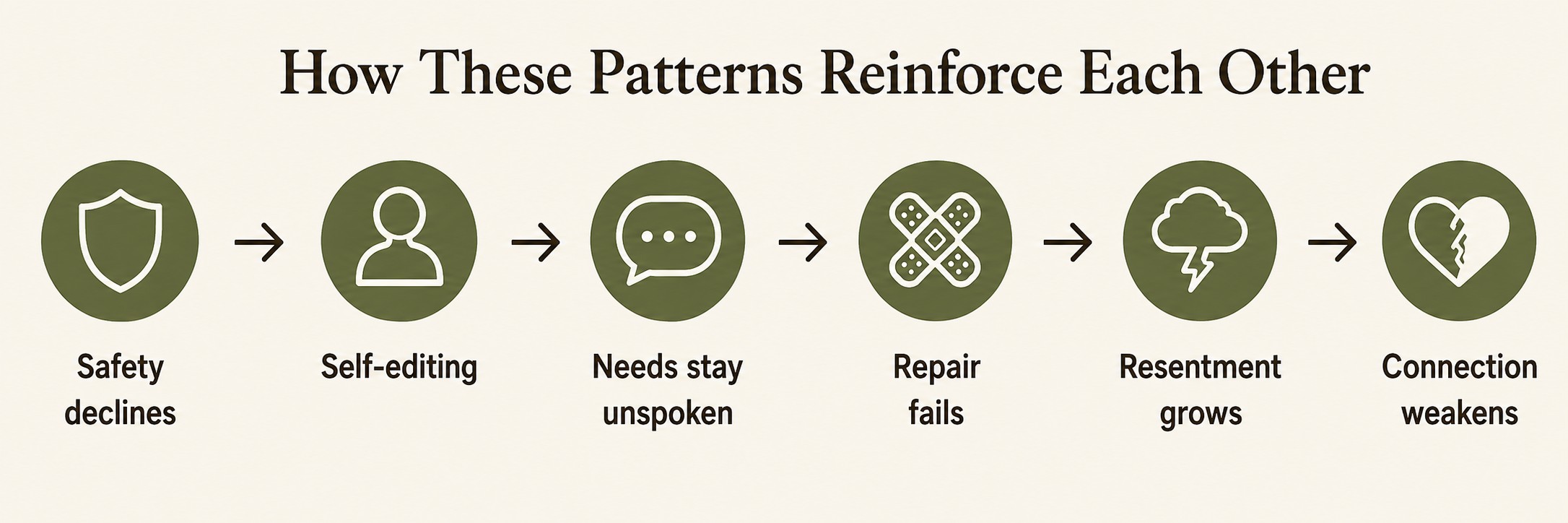
When emotional safety declines, people begin editing themselves. When needs remain unspoken, love can become a performance built around keeping the relationship stable. When the resulting hurt is not repaired, resentment and emotional distance begin to grow.
The sequence can look like this:
Safety declines → self-editing begins → needs remain unspoken → repair fails → resentment grows → connection weakens
The relationship may still contain affection, loyalty, attraction and shared history. That is why its deterioration can feel so confusing. Love may still be present while the conditions needed to sustain connection have gradually weakened.
Recognising this sequence is not about deciding who was the villain. It is about identifying where connection began to change and whether both people were willing and able to respond.
What Recognising These Patterns Does—and Does Not—Mean
Recognising a relationship pattern can help you understand your experience, but it should not be used as a diagnosis or an automatic instruction to stay or leave.
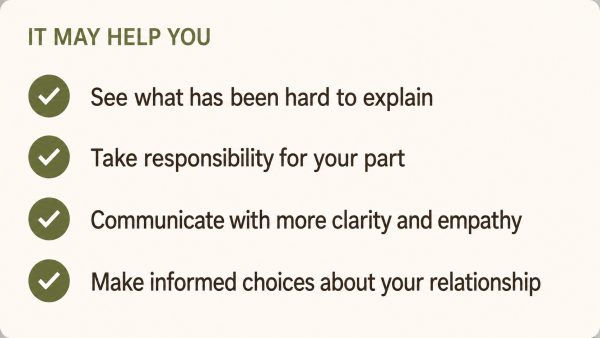
It may help you:
- Name what was previously difficult to explain.
- Understand your part without accepting responsibility for everything.
- Communicate with greater clarity.
- Identify boundaries, needs or repair that may be missing.
- Make more informed choices about the relationship.
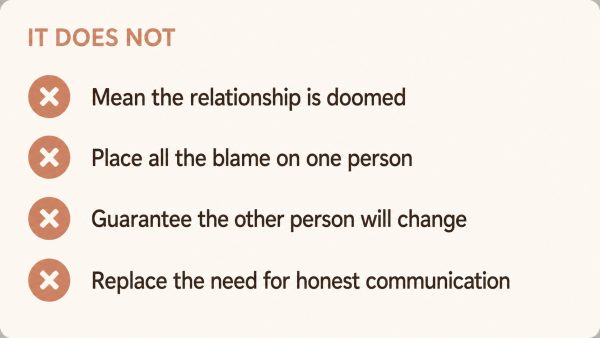
It does not:
- Prove that either person has a psychological disorder.
- Mean every uncomfortable conversation is emotionally unsafe.
- Mean normal compromise is self-abandonment.
- Guarantee that the other person will recognise or change the pattern.
- Replace professional support where abuse, coercion or safety concerns are present.
A GENTLE PLACE TO BEGIN
You Only Need to Begin With the Next 24 Hours
When everything feels too much, even the idea of recovery can become another overwhelming demand.
The free 24-Hour Emotional Recovery Starter Guide helps you focus only on what may support you today—without asking you to solve everything at once.
I created this guide from the kind of support I needed when my own life felt impossible to hold together.
Ready to Explore Your Own Relationship Patterns?
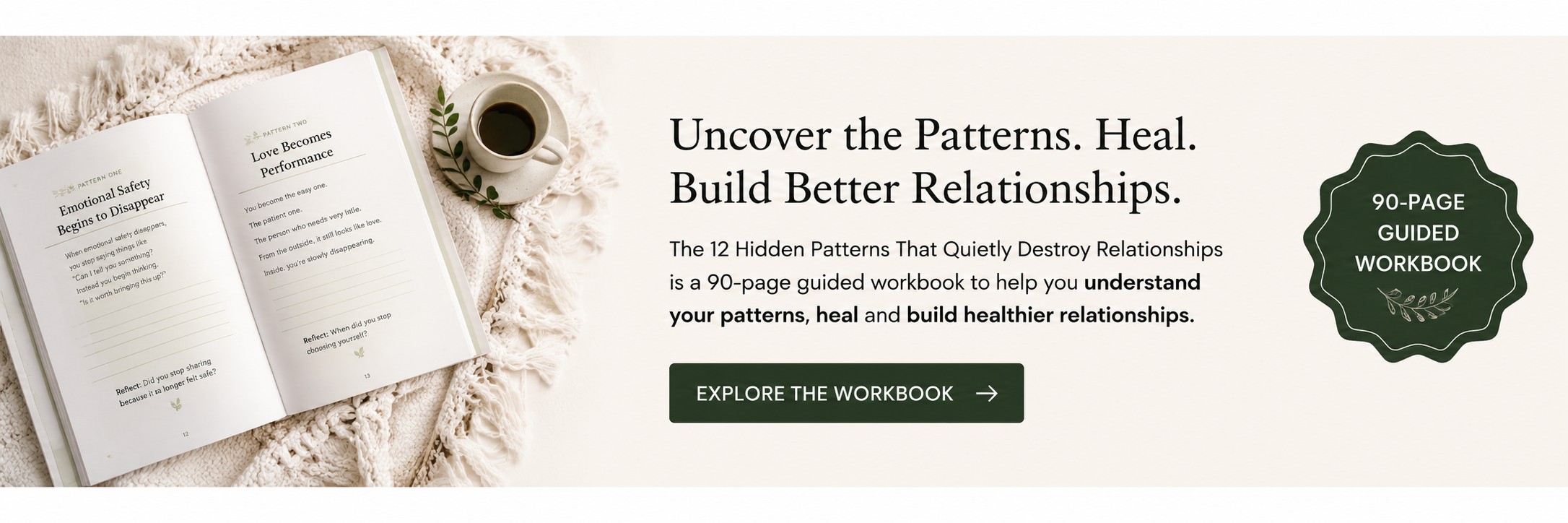
The three patterns in this article are part of a wider group of dynamics that can quietly shape connection, conflict and identity. The 12 Hidden Patterns That Quietly Destroy a Relationship workbook helps you reflect on all twelve at your own pace—without diagnosing, blaming or forcing an immediate decision.
Understanding Is the First Step. Choice Comes Next.
Understanding a pattern is not the same as blaming yourself for allowing it or blaming another person for creating it. Relationships are shaped by two people, their histories, their protective responses and the choices they make when connection becomes difficult.
You may not be able to change how another person communicates, repairs or responds to your needs. You can become clearer about what you experienced, what you contributed, what you require and what you no longer want to abandon in order to remain connected.
That clarity is the purpose of Stage 2. It helps you separate what happened from who you are—and make your next choice with greater self-trust.
Frequently Asked Questions About Why Relationships End