


What Does “Release” Mean?
Release is not one final moment when the past stops mattering. It is a gradual change in your relationship with what happened.
You may still remember it, grieve it or wish it had been different. The difference is that it no longer needs to organise your attention, determine your worth or direct every decision you make.
Release can mean accepting that an answer may never come, allowing grief to exist without continually reopening the wound or recognising that carrying the pain is not the same as honouring what you lost.
The purpose is not to erase your experience. It is to reduce the amount of your present life that must remain devoted to it.
RELEASE IS NOT APPROVAL
Releasing the emotional hold of an experience does not mean that what happened was acceptable.
You can stop carrying something without excusing the person, system or circumstances that caused it.
You can honour what the experience cost you and still choose to move forward.
Signs You May Be in the Release Stage
You may understand what happened without feeling free from its emotional hold. These experiences do not mean you are failing to heal. They may show you what still feels unfinished.
You Understand It but Still Feel Stuck
You can explain what happened, yet your emotions repeatedly return to the same place.
You Keep Replaying the Past
Your mind searches for the conversation, detail or explanation that will finally make everything settle.
You Still Feel Tied to Someone
Contact may have ended, but hope, longing, anger, monitoring or imagined conversations continue.
You Are Waiting for Acknowledgement
Part of your healing still seems dependent on another person recognising the harm, apologising or showing remorse.
You Are Grieving a Future That Did Not Happen
You may be mourning the life, relationship, career, health or certainty you expected to have.
Anger Still Feels Protective
Releasing anger may feel like minimising the harm, surrendering your right to justice or becoming vulnerable again.
You Feel Pressured to Forgive
Other people’s expectations make you feel as though healing requires forgiveness before you are ready—or at all.
You Want More Space for Your Present Life
You do not need the past erased. You want it to stop consuming so much of today.
How to Release Without Forcing It
FOCUS ON
AVOID
TOO OVERWHELMED TO PROCESS THIS YET?
Release requires enough capacity to notice and process what you are carrying. If you currently feel flooded, panicked, shut down or unable to concentrate, return to Stage 1 and begin with stabilisation.
STILL TRYING TO UNDERSTAND WHAT HAPPENED?
If you are still trying to identify your responses, relationship patterns or changes in identity, Stage 2 may be the more useful place to begin.
Choose What You Need to Release
You do not need to process every part of your experience at once. Begin with the form of attachment, grief or unfinished emotion that is taking up the most space in your life now.

This path may be right for you if your thoughts, hopes or emotional energy remain centred on someone who is no longer available—or on a relationship that cannot continue as it was.
PATH A
I Need to Release a Person or Relationship
I Miss Them and Don’t Know How to Let Go
Gently explore why you may still miss someone you cannot return to—or someone you know you should not.
I’m Struggling With No Contact
Break the cycle of waiting, checking and hoping for contact that may never come.
I Feel Emotionally Attached and Can’t Move On
Understand the bond and begin loosening its emotional grip without shaming yourself.

This path may be right for you if your mind keeps returning to what happened, searching for an explanation, a different outcome or the sense of resolution you never received.
PATH B
I Need to Release the Hold of What Happened
I’m Waiting for Closure
Understand why another person may never be able to provide the acknowledgement, explanation or emotional repair you are waiting for.
Betrayal Still Feels Present
Understand why betrayal, gaslighting and unanswered questions can continue affecting your body, identity and ability to trust yourself.
I Need Help Processing What Remains Unfinished
Use structured reflection to name what you are carrying, loosen the need for answers and begin making more space for the present.

This path may be right for you if a career, responsibility or former version of yourself once shaped your identity—and you are unsure who you are without it.
PATH C
I Need to Release an Old Role or Version of Myself
I Need to Release an Old Role or Version of Myself
Understand why losing a relationship, career, role or expected future can disrupt your sense of identity.
I Feel Lost Without My Old Life
Identify whether you are grieving, depleted, disconnected, misaligned or ready to explore a new direction.
I Am Ready to Rebuild
Separate the roles that ended from the qualities that remain and begin rebuilding through values, preferences and lived evidence.
What Am I Still Waiting For?
Release often becomes clearer when you identify what part of you is still waiting—for an answer, an apology, a different ending or permission to move forward. You do not need to resolve every question today. Notice which one holds the most emotional weight.
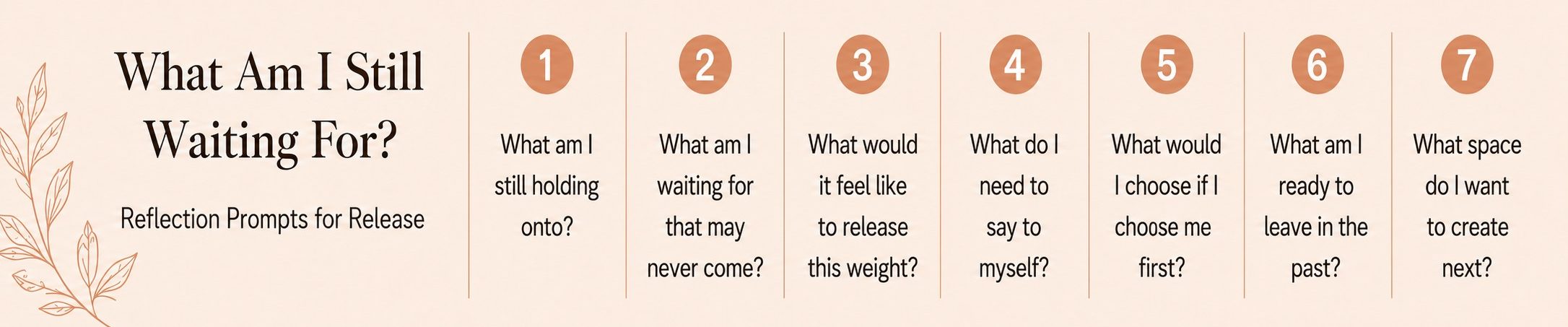
Consider one prompt at a time. Reflection should create clarity—not become another form of rumination.
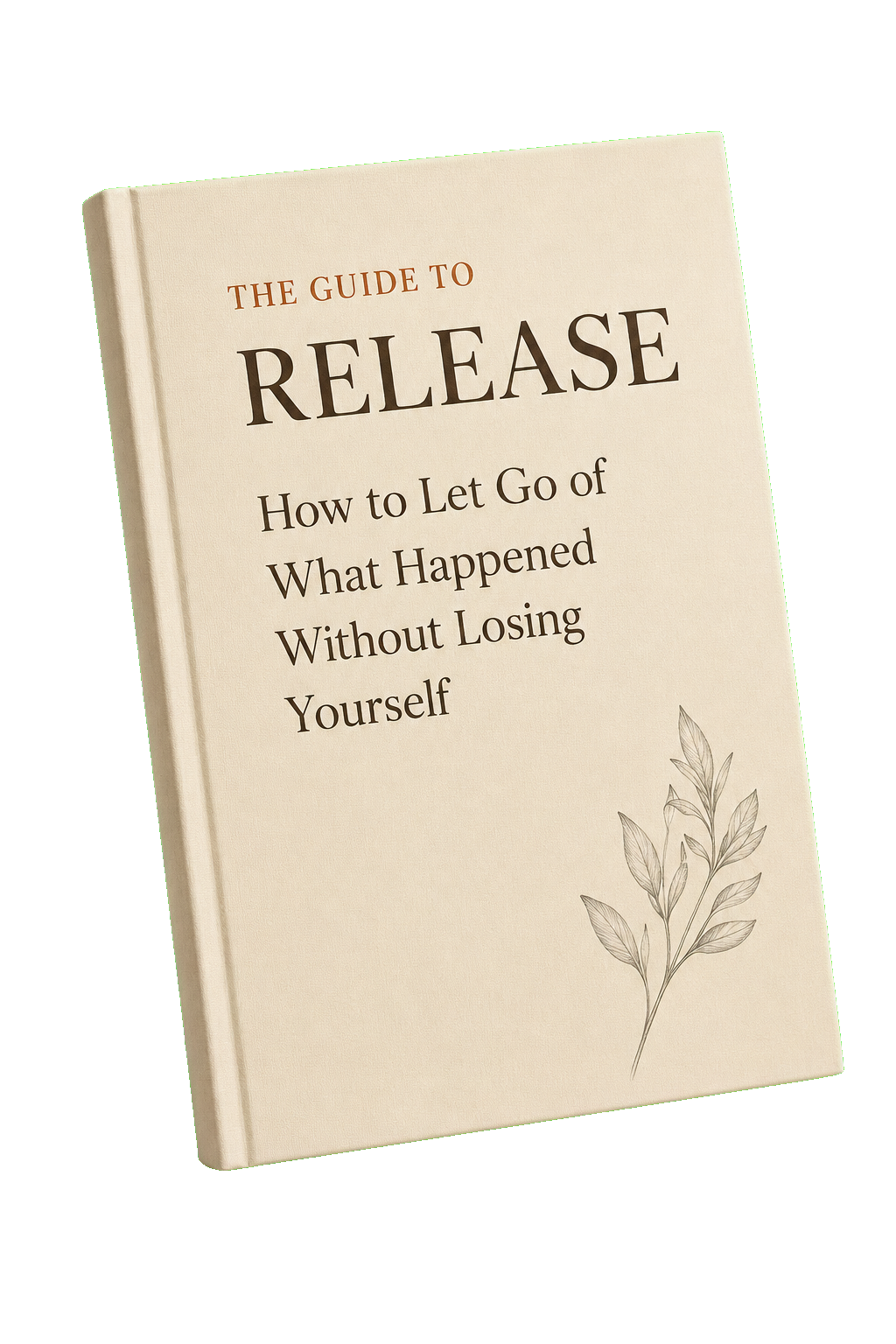
RELEASE WORKBOOK · IN DEVELOPMENT
How to Let Go of What Happened Without Losing Yourself
A guided workbook for processing grief, loosening emotional attachment, releasing the need for answers and making space for what comes next—without requiring forgiveness, forgetting or pretending that what happened was acceptable.
Join for development updates and be the first to know when the workbook becomes available.
When Additional Support Matters
Emotional processing does not need to happen alone.
Consider seeking appropriately qualified support if memories, grief, anger, guilt or emotional attachment are persistent, worsening or significantly affecting sleep, relationships, work, self-care or your ability to function.
Professional support is also important when processing involves traumatic memories, dissociation, severe anxiety, depression, substance use or concerns about your safety.
Seek urgent local help if you may harm yourself or someone else, cannot remain safe or need immediate medical assistance. In Australia, call Triple Zero (000) in an emergency or Lifeline on 13 11 14.
Release Is About Making Space
Release is not about proving that the past no longer affects you.
It is about gradually reducing how much of your present life must remain devoted to what happened, who left, what was lost or who you once needed to be.
You may carry memories, lessons, grief and boundaries forward. What can change is the amount of your identity, attention and future that remains organised around them.
Release does not erase your story. It creates more space around it.

WHAT COMES AFTER RELEASE?
Stage 4 — Reconnect
Release creates space, but that space can initially feel unfamiliar.
When your attention is no longer organised around survival, explanation or the past, the next question often becomes:
What do I want my life to contain now?
If you are beginning to ask that question, start by identifying why you feel lost and what kind of direction or support you need next.
Need Something Gentler Before You Continue?
If this page has brought up more than you can process right now, Get the Free 24-Hour Guide. What to Do When Your Life Falls Apart gives you a gentle plan for the next 24 hours—without asking you to solve everything at once.