
Written by Sarah ‘Sy’ Taylor
Former First Responder – Trauma-Informed Writer – Founder of The Inner Growth Path
Rebuilding identity after emotional collapse
Is It Love—or Is Fear Directing the Connection?
When a relationship feels difficult to leave, it is natural to question whether what you are experiencing is love, attachment or both.
Attachment is not inherently unhealthy. Human beings form emotional bonds, depend on one another and feel distress when important relationships are threatened. Love can also include longing, vulnerability and fear of loss.
The distinction becomes important when fear begins directing your behaviour. You may abandon your needs, tolerate repeated harm, chase reassurance or feel unable to imagine yourself outside the relationship.
This article explores seven signs that attachment may be exerting more influence than love. They are prompts for reflection—not a diagnosis, proof that your relationship is unhealthy or an instruction to leave.
Attachment and Love Are Not Opposites
Love describes care, connection and concern for another person. Attachment describes the emotional bond that makes closeness feel important and separation feel significant.
They can exist together.
You can genuinely love someone while also fearing abandonment, relying on their reassurance or struggling to maintain your identity within the relationship. You can also feel intensely attached to someone whose behaviour is inconsistent or harmful.
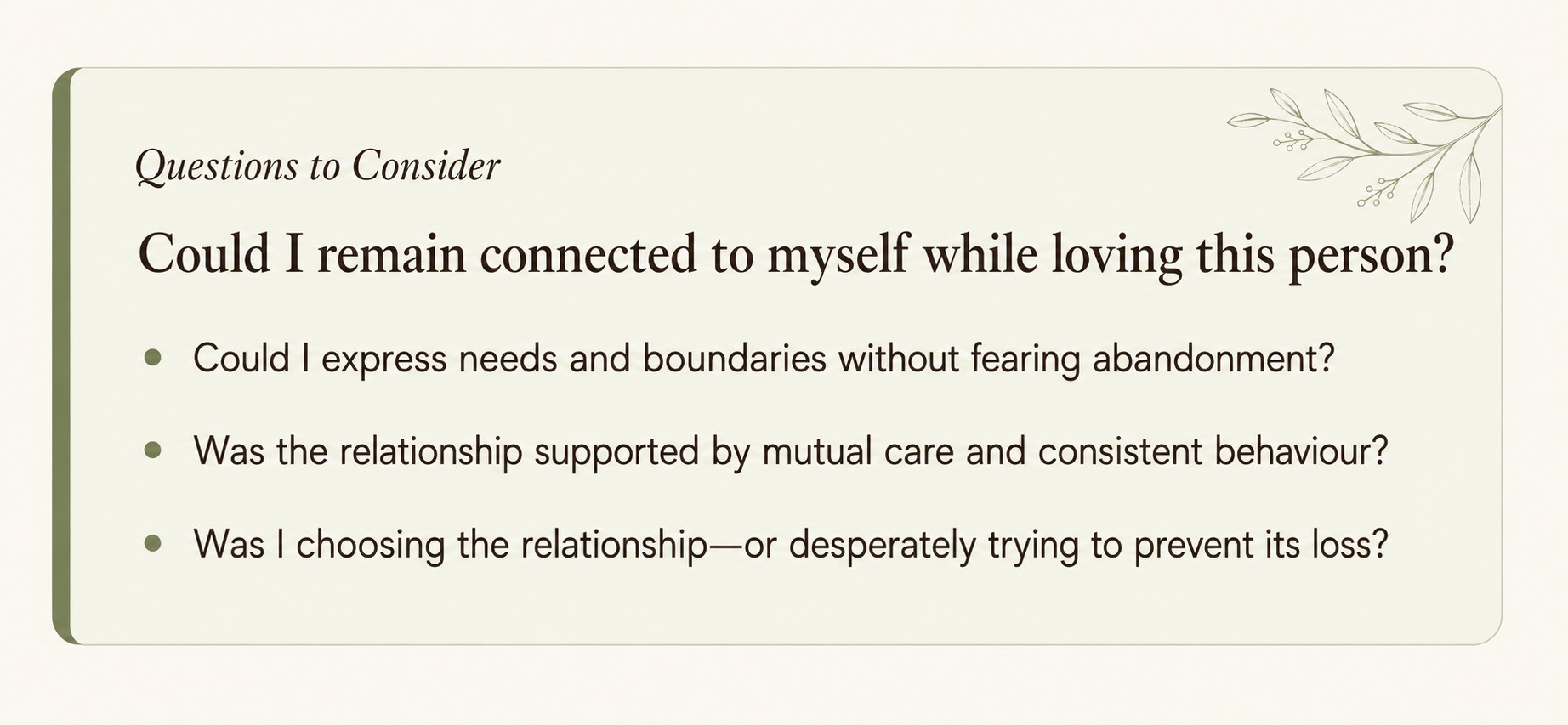
Instead of asking only, “Was it love?”, consider asking:
- Could I remain connected to myself while loving this person?
- Could I express needs and boundaries without fearing abandonment?
- Was the relationship supported by mutual care and consistent behaviour?
- Was I choosing the relationship—or desperately trying to prevent its loss?
The goal is not to invalidate your feelings. It is to understand what those feelings were asking you to do.
Why Attachment Can Feel So Intense
When an important connection feels uncertain, your attachment system may become activated. You might become preoccupied with changes in communication, seek repeated reassurance or experience strong relief when closeness temporarily returns.
In an inconsistent relationship, the pattern can look like:
- Anxiety when contact or affection decreases
- Relief when the person reconnects
- Repeatedly analysing messages and behaviour
- Difficulty concentrating on the rest of your life
- Emotional highs and lows tied to the person’s availability
This does not automatically mean you are “addicted,” trauma bonded or incapable of healthy love. It means the relationship may be activating fear, uncertainty or an unmet need for safety.
Important distinction: A trauma bond refers to an attachment formed within a repeated cycle of mistreatment and reconciliation. Intense feelings, difficulty letting go or an anxious attachment style do not, by themselves, prove that a trauma bond exists.
A connection may feel unusually familiar without revealing whether a healthy relationship can develop. Explore soul recognition, meaning and discernment.
Seven Signs Attachment May Be Directing Your Behaviour
1. The Relationship Feels More Uncertain Than Secure
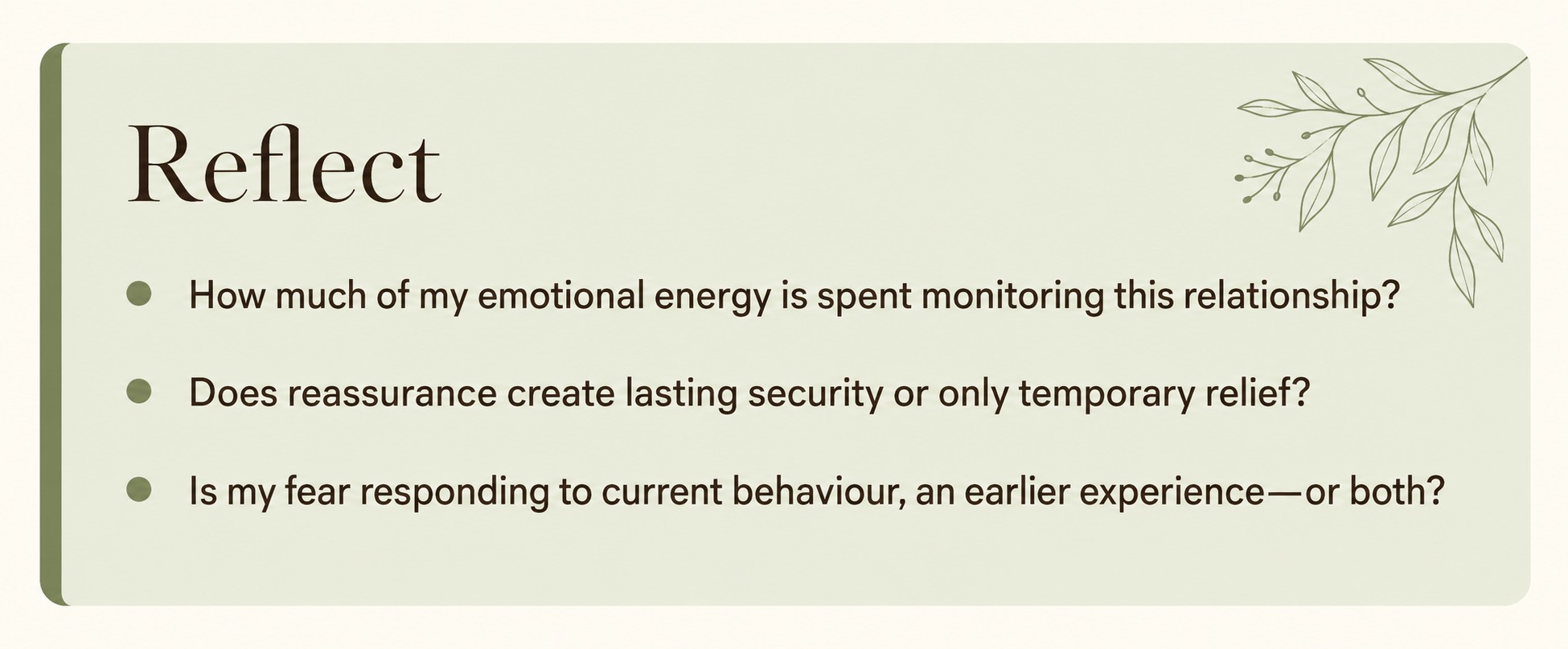
No relationship feels completely secure all the time. New relationships, periods of change and difficult conversations can all create uncertainty. The question is whether insecurity is an occasional response to circumstances or the emotional climate of the relationship.
When attachment fear is directing the connection, your sense of safety may depend heavily on the other person’s availability. A delayed reply, change in tone or request for space can feel like evidence that the relationship is ending. Reassurance may help temporarily, but the anxiety quickly returns.
This does not automatically mean the relationship is unhealthy. It may indicate that uncertainty within the relationship—or earlier experiences of abandonment, betrayal or inconsistency—is activating your attachment system.
2. Losing Them Feels More Frightening Than Losing Yourself
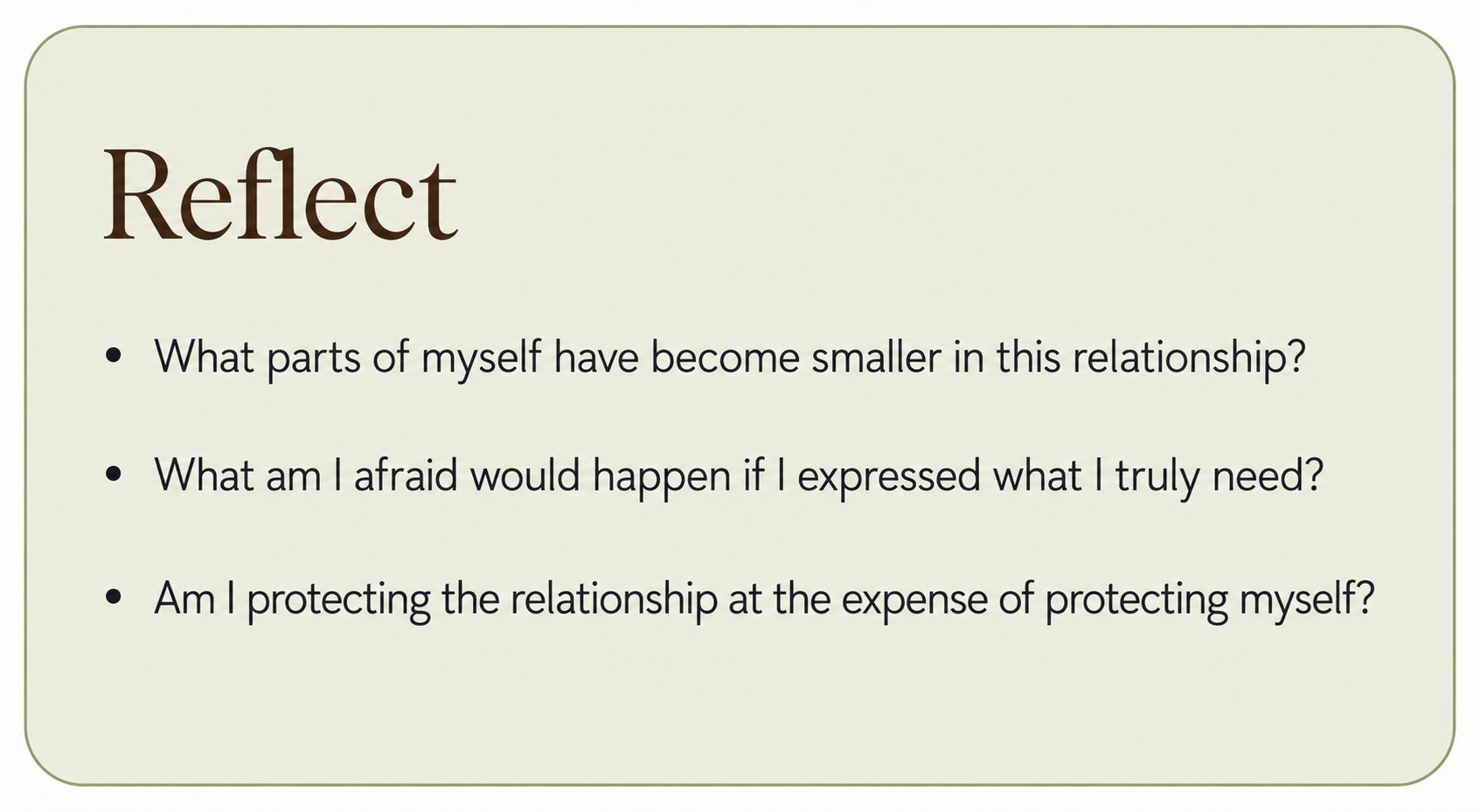
Fear of losing someone is human. It becomes more concerning when preserving the relationship repeatedly requires you to abandon your needs, values, boundaries or identity.
You may agree to things you do not want, remain silent about behaviour that hurts you or organise your life around preventing the other person from withdrawing. The relationship survives, but your connection with yourself gradually weakens.
This usually happens in small compromises rather than one dramatic decision. Adaptation is part of intimacy; consistently disappearing to remain loved is not.
3. You Overgive, Fix or Chase Reassurance
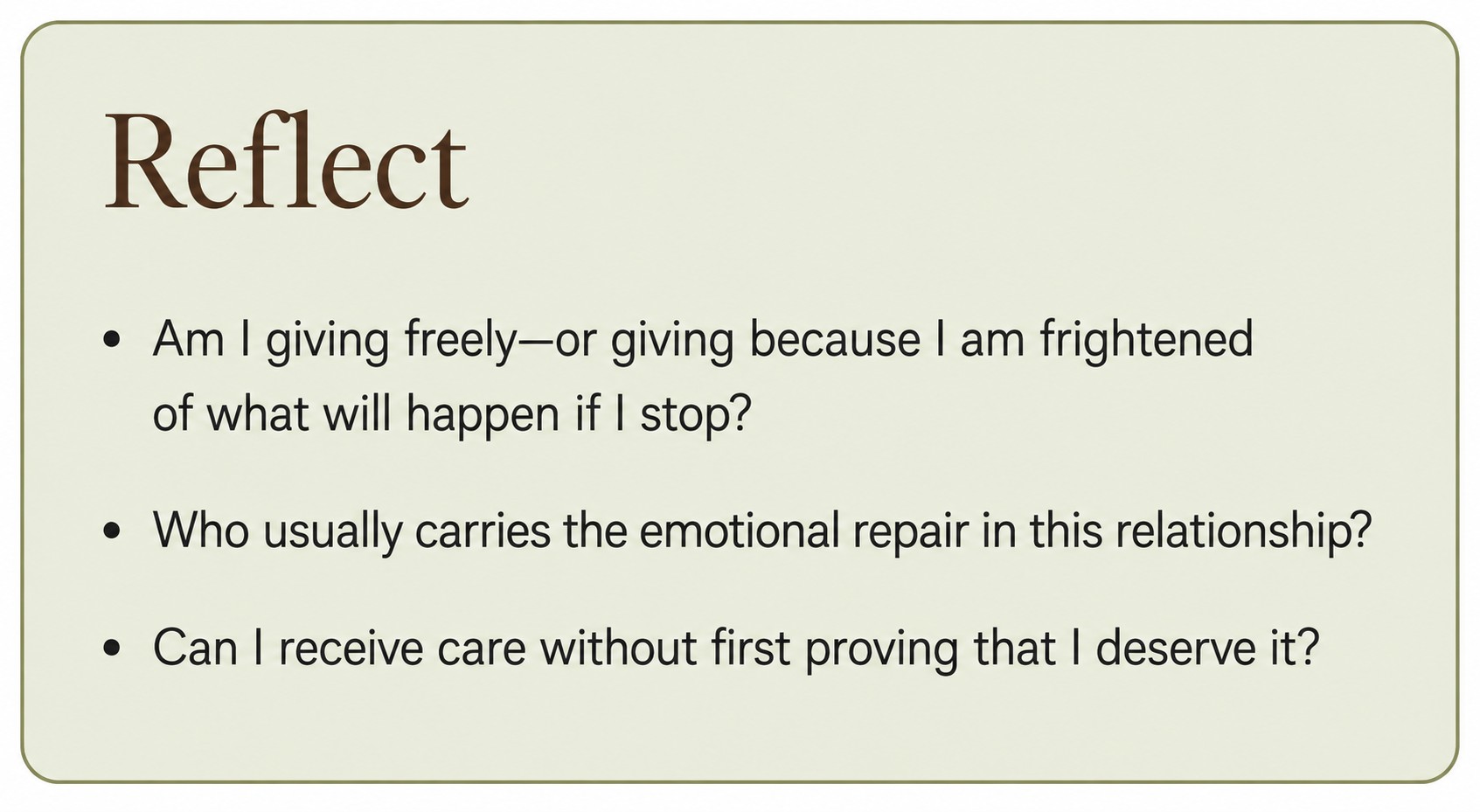
I recognise this pattern in my own relationships. I could become endlessly understanding, take responsibility for restoring connection and believe that if I explained myself more carefully, gave more or remained patient enough, the relationship would finally feel secure.
Giving is not the problem. The pattern becomes unbalanced when care flows primarily in one direction or when giving becomes a strategy for earning safety, affection or commitment.
You may manage the other person’s emotions, repeatedly initiate repair or ignore your own exhaustion because stopping feels too risky. What appears to be devotion can gradually become self-abandonment.
4. You Repeatedly Explain Away Behaviour That Hurts You
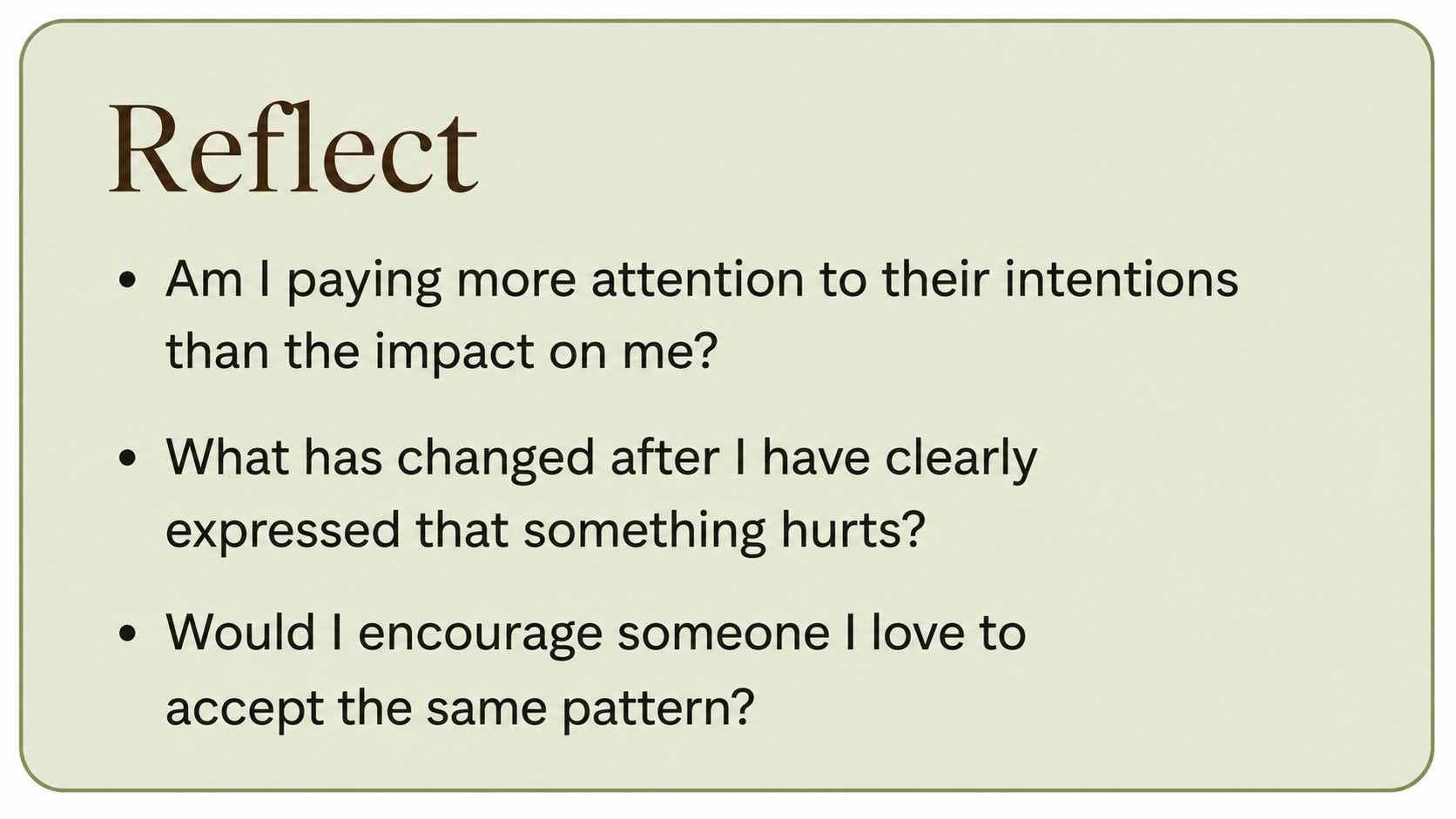
Understanding another person’s history can create compassion, but compassion can become self-erasure when it is repeatedly used to excuse behaviour that causes harm.
You may focus on their trauma, stress, childhood, attachment style or intentions while giving less attention to the effect their behaviour has on you. An explanation can provide context; it does not remove responsibility or require you to accept the behaviour.
One difficult incident does not define an entire relationship. Look for repeated patterns, whether concerns can be discussed safely and whether acknowledgement is followed by meaningful change.
5. Your Identity Begins Shrinking Around the Relationship
A close relationship naturally becomes part of your identity. Difficulty arises when it becomes the primary source of your worth, direction, belonging or emotional stability.
You may lose contact with friends, interests, routines and ambitions that once made you feel like yourself. Decisions begin revolving around the relationship, and imagining life without it can feel like imagining life without an identity.
This does not mean you never loved the person. It means the relationship may have been carrying needs that no single relationship can safely hold on its own.
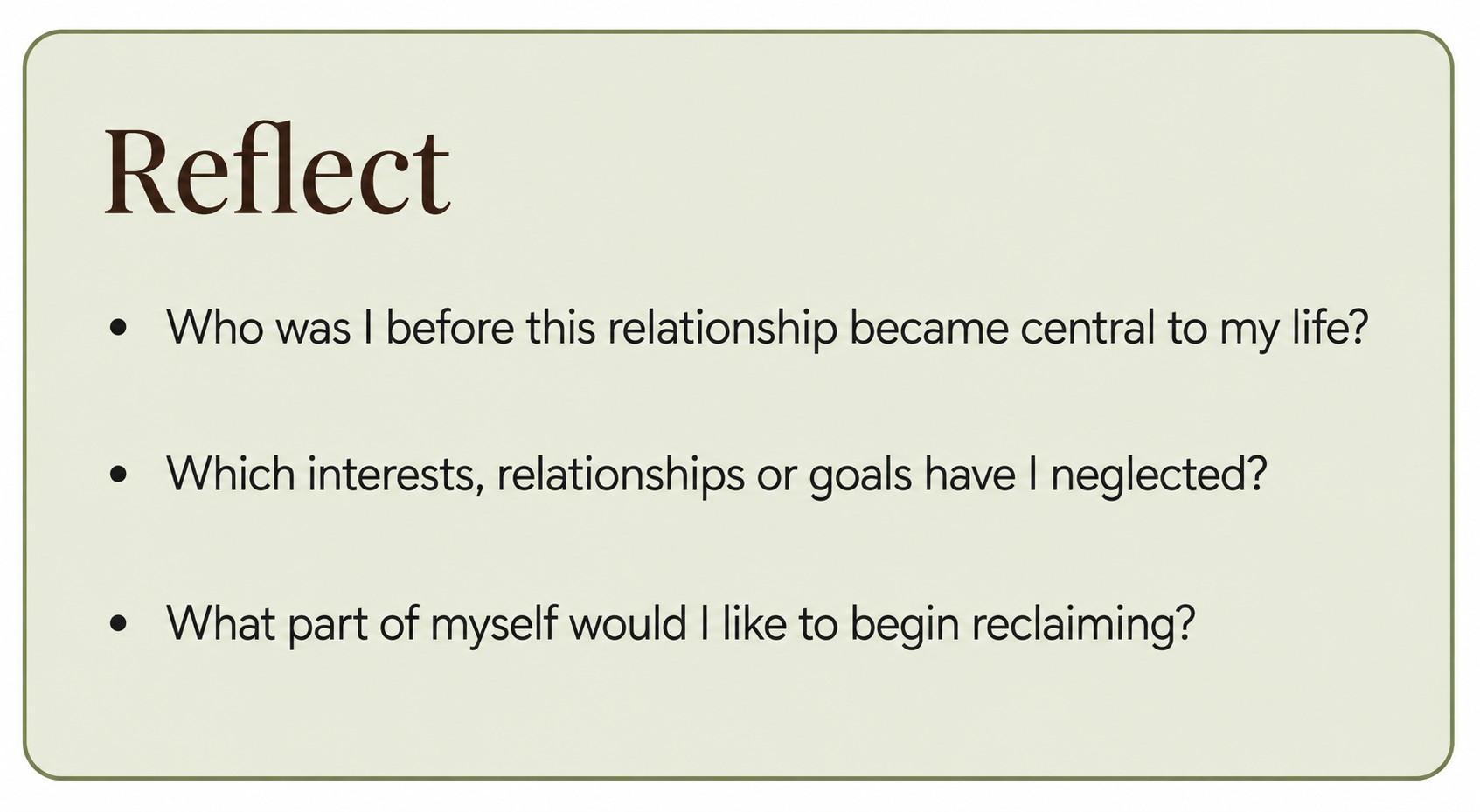
6. You Remain Because Leaving Feels Unbearable
Remaining in a painful relationship is not always a simple choice. Love, hope, finances, children, isolation, fear, practical dependence and concern about another person’s reaction can all make leaving complicated.
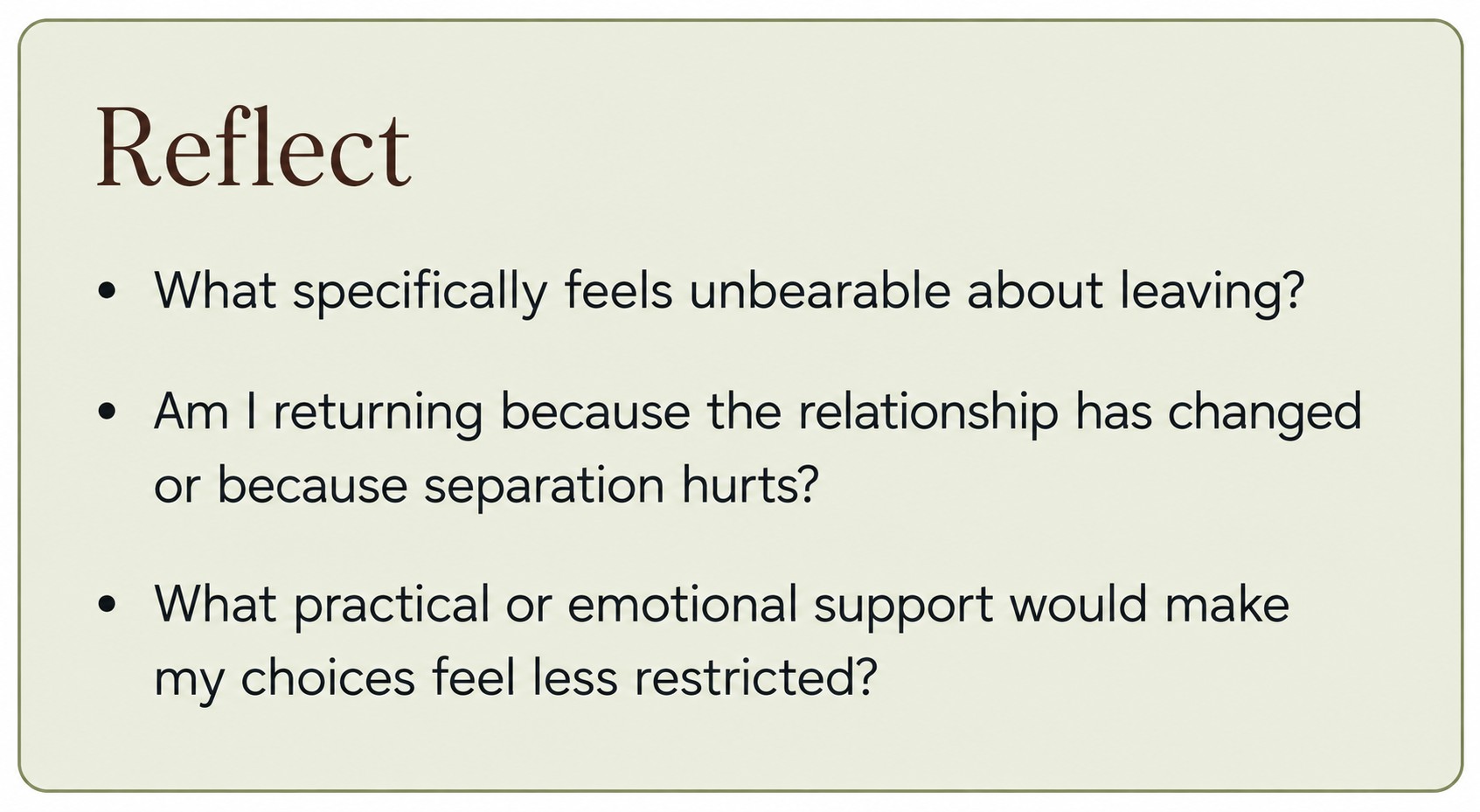
Attachment fear can add another layer. Separation may feel physically intolerable, even when part of you recognises that the relationship is no longer sustainable. You may return because reconnecting provides immediate relief from distress—not because the underlying problem has changed.
Do not use this sign to shame yourself. Use it to identify what support, safety, information or stability you would need to make a genuinely free decision.
Attachment responses can become more noticeable as closeness develops. This guide explains why relationships sometimes change after three months.
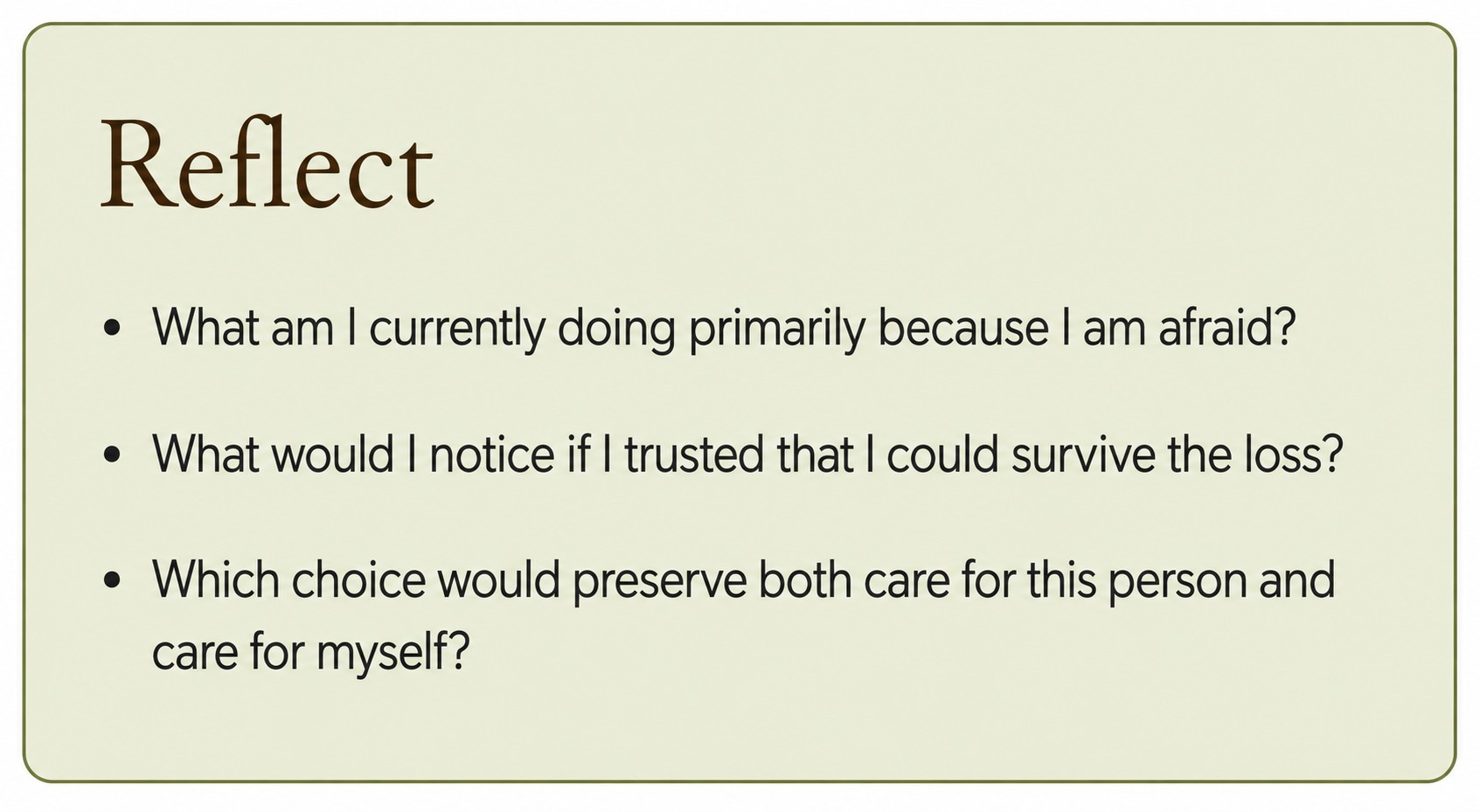
7. Your Choices Are Driven Primarily by Fear
Fear can exist inside genuine love. The important question is whether fear is present or whether it has become the primary decision-maker.
Fear-led choices often focus on preventing abandonment: staying silent, chasing contact, accepting uncertainty indefinitely or changing yourself to remain desirable. Love-led choices are more able to include honesty, boundaries, mutual responsibility and respect for both people’s autonomy.
You do not need to eliminate fear before making a healthy choice. You need enough space to notice what you would choose if fear were not speaking quite so loudly.
Ready to Explore Your Own Relationship Patterns?
These seven signs can help you begin noticing what is driving the connection. The 12 Hidden Patterns workbook helps you examine recurring dynamics in greater depth—without diagnosing, blaming or forcing an immediate decision.
Love Can Be Real Even When the Relationship Is Not Sustainable
Recognising attachment does not mean the love was false. You may have genuinely cared for someone, wanted the best for them and shared meaningful experiences while also participating in a relationship shaped by fear, dependency or self-abandonment.
I had to learn that my love could be real without making every relationship right for me. I could honour how deeply I cared without using that love as evidence that I had to remain.
The more useful question was not, “Did I truly love them?” It was, “What did loving them repeatedly require me to do to myself?”
Your love can be real without requiring you to remain in a relationship that is costing you your identity.
Still Waiting for Something From What Happened?
You may understand why the relationship ended and still find part of yourself waiting for an answer, apology, acknowledgement or different ending.
Join the Release Workbook waitlist and receive the free five-page What Am I Still Waiting For? reflection sheet immediately.
You’ll also be the first to hear when the complete Release Workbook becomes available.
No purchase is required to join the waitlist.
Why Knowing the Difference Does Not Make Letting Go Easy
Letting go involves more than losing a person. You may also be grieving:
- The future you imagined
- The identity you held inside the relationship
- Familiar routines and emotional roles
- The hope that the relationship would eventually become what you needed
- The temporary relief that reconnection provided
Familiarity can feel safer than uncertainty, even when the familiar relationship is painful. This is one reason insight alone may not immediately remove the urge to reconnect.
Difficulty letting go does not prove that the relationship was meant to continue. It means the attachment, grief and identity built around it deserve to be addressed with care.
How to Respond Without Abandoning Yourself
Understanding the pattern is not an instruction to stay or leave. It is an opportunity to create enough clarity to make a less fear-driven choice.
Begin by:
- Observing the pattern without labelling yourself. Record what actually happens before, during and after attachment anxiety appears.
- Separating facts from feared outcomes. Ask what you know, what you are assuming and what previous experience may be adding.
- Restoring parts of your identity outside the relationship. Reconnect with routines, friendships, interests and goals that belong to you.
- Expressing one clear need or boundary. Pay attention not only to the response, but to whether behaviour changes consistently.
- Seeking appropriate support. A trusted professional or support service may be important when coercion, abuse or personal safety is involved.
Self-trust is not always knowing immediately what to do. Sometimes it begins with refusing to abandon what you can already see.
If this relationship has left you disconnected from who you are, read Identity Loss After Trauma: Why You Don’t Feel Like Yourself Anymore.
Frequently Asked Questions About Attachment vs Love
What is the difference between attachment and love?
Love and attachment are not opposites. Love involves care, connection and concern for another person, while attachment is the emotional bond that makes closeness important and separation significant. The useful question is whether care, honesty and mutual choice—or fear of losing the connection—is primarily directing your behaviour.
Why does attachment feel like love?
Attachment can feel like love because both involve longing, vulnerability and distress when a meaningful connection is threatened. When the relationship is inconsistent, changes in contact or affection may create anxiety followed by strong relief when closeness returns. Intensity alone does not prove either love or unhealthy attachment; look at the wider pattern.
How do I know if I’m trauma bonded?
Difficulty leaving, emotional dependency or strong attachment does not by itself prove a trauma bond. Trauma bonding generally involves attachment developing within a repeated pattern of mistreatment, fear or coercion followed by reconciliation or relief. If you are concerned about abuse or personal safety, seek individual support rather than relying on an online checklist.
Why can’t I let go of someone who hurt me?
You may be grieving more than the person. Letting go can also mean losing familiar routines, an imagined future, an emotional role and the identity you held inside the relationship. Difficulty letting go does not mean the relationship was right for you or that you should return.
Can you have both love and attachment?
Yes. You can genuinely love someone while also fearing abandonment, depending heavily on reassurance or losing yourself within the relationship. Healing does not require denying the love; it involves recognising when fear is directing choices that conflict with your wellbeing.
What does healthy love feel like?
Healthy love allows room for honesty, individuality, boundaries, mutual care and repair. It may not feel calm every moment, but difficulties can be addressed without one person repeatedly disappearing to preserve the connection. Over time, you should be increasingly able—not increasingly afraid—to be yourself.
One Helpful Resource
If you want a beginner-friendly introduction to adult attachment patterns, Attached by Amir Levine and Rachel Heller offers useful language for reflection. Treat attachment styles as a framework—not a diagnosis or a complete explanation for another person’s behaviour.