STAGE 4 — RECONNECT
Why You Feel Lost in Life—and What to Do Next
Feeling lost does not always mean the same thing.
You may be exhausted and unable to think beyond the next day. You may feel disconnected from your preferences and needs. You may be grieving a life that ended, living according to expectations that no longer fit or simply unsure which direction to choose next.
This guide will help you understand what kind of “lost” you may be experiencing and choose one realistic direction to explore—without demanding a complete plan for your life.


Written by Sarah ‘Sy’ Taylor
Former First Responder – Trauma-Informed Writer – Founder of The Inner Growth Path
Rebuilding identity after emotional collapse
THE SHORT ANSWER
Why Do I Feel Lost in Life?
Feeling lost often means that something important has changed, ended or stopped fitting—but you have not yet developed a clear sense of what comes next.
You may feel lost because you are depleted and do not have the capacity to think beyond immediate survival. You may be disconnected from your preferences and needs, grieving an identity or future that has ended, living according to expectations that no longer reflect your values or simply unsure which direction to choose.
These experiences can feel similar, but they do not require the same response. Rest will not resolve a life that is deeply misaligned, just as demanding a new purpose will not help when your body and mind are exhausted.
The first step is not to create a complete plan for your future. It is to understand what “lost” means for you now. Once you identify what is actually missing—capacity, connection, acceptance, alignment or direction—you can choose a smaller and more appropriate next step.
UNDERSTANDING FEELING LOST
Feeling Lost Does Not Always Mean the Same Thing
When you say, “I feel lost,” you may be describing several very different experiences.
You might be too exhausted to imagine a future. You might know that your old life no longer fits but have no language for what should replace it. You may be grieving a relationship, career, identity or future that once gave your life structure. Or you may have enough stability to move forward but feel unable to choose between several possible directions.
From the outside, each of these experiences can look like indecision. Internally, however, they require different things.
Someone who is depleted may need safety, rest and reduced pressure before they can think clearly. Someone who is disconnected may need to rediscover their preferences. Someone who is grieving may need time to acknowledge what has ended. Someone who is misaligned may need to question the expectations shaping their choices. Someone who is directionless may be ready to test a new path.
Before You Ask, “What Should I Do With My Life?”
Ask a more useful question:
What is making direction difficult for me right now?
You do not need to solve your entire future before you can move. You first need to identify the kind of support, clarity or experience that is missing.
FIND YOUR STARTING POINT
Five Types of Feeling Lost
Feeling lost is not a diagnosis, and these categories are not rigid. You may recognise yourself in more than one—especially after trauma, loss or a major life transition.
Use them to identify what may be making direction difficult now. You are not trying to label yourself permanently. You are looking for the most appropriate place to begin.
Depleted: You Lack Capacity
Sometimes you cannot imagine what you want because your physical and emotional resources are already being used to get through the day.
When you are depleted, questions about purpose can feel overwhelming. Even choices that would normally be manageable may require more energy than you currently have.
You may recognise this if:
- Everyday decisions feel unusually difficult.
- You want clarity but feel too tired to think.
- Planning your future creates pressure rather than possibility.
Your first step: Reduce unnecessary demands and restore enough capacity to think beyond immediate survival. You do not need to choose a new direction while you are running on empty.
Disconnected: You Cannot Hear Your Preferences or Needs
You may have spent so long adapting, performing a role or prioritising other people that your own preferences have become difficult to recognise.
You can make decisions, but you do not know whether those decisions reflect what you genuinely want. Life may continue to function while feeling strangely distant or impersonal.
You may recognise this if:
- You can describe what others need more easily than what you need.
- You automatically choose what is expected or practical.
- You struggle to identify what you enjoy when no one else is involved.
Your first step: Begin noticing small preferences without requiring them to reveal your entire identity. What you want to eat, wear, decline, continue or explore can help rebuild contact with yourself.
Grieving: An Old Life or Future Has Ended
Feeling lost can be a form of grief. A relationship, career, home, community, identity or imagined future may have given your life structure—and now that structure is gone.
You may understand intellectually that life has changed while still feeling emotionally oriented toward what was supposed to happen.
You may recognise this if:
- You keep comparing your current life with the future you expected.
- Moving forward feels like abandoning something important.
- You are not only missing a person or role; you are missing who you were within that life.
Your first step: Name what ended before demanding that something new replace it. Grief needs acknowledgement, not an immediate reinvention plan.
Misaligned: Your Life Reflects Expectations Rather Than Values
You may have built a life that appears sensible or successful but no longer feels like yours.
This can happen when your decisions have been shaped by duty, approval, fear, family expectations or an identity you have outgrown. Nothing may be obviously wrong, yet continuing in the same direction feels increasingly difficult.
You may recognise this if:
- Your life looks acceptable from the outside but feels empty internally.
- You often use words such as “should,” “supposed to” or “too late.”
- You feel relief when imagining stepping away from a role or expectation.
Your first step: Identify where your choices and values have separated. You do not need to overturn your life immediately; begin by noticing what feels true, what feels inherited and what no longer fits.
Directionless: You Are Ready to Move but Do Not Know Where
Sometimes you have enough stability and energy to move forward, but no option feels certain enough to choose.
You may be waiting for a perfect plan, a clear calling or complete confidence before taking action. The problem is no longer an inability to move—it is the belief that you must know where the path leads before you begin.
You may recognise this if:
- Several possibilities interest you, but none feels guaranteed.
- You repeatedly research, plan or reconsider without testing anything.
- You are afraid that choosing one direction will close every other door.
Your first step: Choose one small direction to test rather than one permanent future to commit to. Clarity often develops through experience, not before it.
You May Be More Than One Type
These experiences can overlap. You might be grieving and depleted, or disconnected from yourself while also living out of alignment.
If several types fit, begin with the one creating the greatest immediate barrier. Capacity usually comes before clarity. Grief may need acknowledgement before new direction feels possible. Small preferences may need to return before larger values become visible.
The aim is not to determine exactly who you will become. It is to understand what is preventing your next step.
LIFE AFTER CHANGE
Why Major Life Changes Create Disorientation
A major life change does more than alter one part of your circumstances. It can disrupt the structure that previously helped you understand where you were, who you were and what was supposed to happen next.
A relationship may have organised your home, routines and imagined future. A career may have provided responsibility, community and a clear measure of progress. A familiar role may have shaped how other people saw you and how you understood yourself.
When that structure changes, you lose more than the role itself. You may also lose:
- familiar routines and reference points;
- a sense of belonging or usefulness;
- assumptions about what your future would contain;
- goals that only made sense within your previous life;
- people who reflected a familiar version of you back to yourself.
This can create an in-between period. The old life no longer provides direction, but the new one has not yet become familiar enough to guide you.
The Map Changed Before You Had Time to Redraw It
Imagine navigating with a map built around a particular relationship, career, home or future. When that part of life ends, the map does not immediately update itself.
You may continue moving according to old priorities even when they no longer lead anywhere meaningful. Or you may stop moving because you no longer trust your sense of direction.
This does not necessarily mean that you have no purpose. It may mean that the reference points you previously used to make decisions are no longer reliable.
Disorientation Is Not the Same as Failure
There is often pressure to turn a major ending into an inspiring new beginning as quickly as possible. But the period between lives can be unclear, uncomfortable and emotionally uneven.
You may feel relief and grief at the same time. You may know that something needed to end while still missing the certainty it provided. You may be ready for change without knowing what form that change should take.
The task is not to force immediate certainty. It is to gradually develop new reference points through your values, preferences, relationships and lived experience.
You are not required to know the final destination while you are still learning how your life has changed.
Structure
How your days were organised
Identity
The roles that explained who you were
Future
What you expected life to become
When these change together, disorientation is understandable.
what do you need first?
The Difference Between Lacking Purpose and Lacking Capacity
Feeling unmotivated or unable to imagine a future does not always mean that your life lacks meaning. Sometimes your system is simply too depleted to generate curiosity, possibility or momentum.
Before searching for a new purpose, ask whether you currently have enough capacity to engage with one.
You May Be Lacking Capacity If:
- ordinary responsibilities already use most of your available energy;
- decisions feel difficult even when the options are relatively simple;
- activities you normally value feel like additional demands;
- you want to withdraw from pressure more than you want to pursue something new;
- thinking about the future makes you feel overwhelmed, flat or exhausted.
When capacity is the primary issue, adding goals can create more pressure. The more appropriate first step may be reducing demands, restoring basic routines and helping your body and mind experience greater steadiness.
What you may need first: rest, support, simplification, nervous-system regulation and permission to stop solving your entire life.
Feeling depleted or overwhelmed? Start with Stage 1: Stabilise →
You May Be Lacking Purpose or Direction If:
- you have enough energy for daily life but feel uncertain about where to invest it;
- you want something to change but cannot identify what;
- several possibilities interest you, yet you remain hesitant to test any of them;
- your current goals feel disconnected from what matters to you;
- you are waiting for certainty before taking a small step.
When direction is the primary issue, more rest alone may not create clarity. You may need new experiences, honest reflection and opportunities to test what feels meaningful in practice.
What you may need next: exploration, values clarification, small experiments and a direction that is provisional rather than permanent.
Capacity and Purpose Can Affect Each Other
You do not have to fit perfectly into one side.
Long-term depletion can make life feel meaningless because you no longer have the energy to engage with what matters. A life that feels deeply misaligned can also drain your capacity because so much energy is spent maintaining something that no longer fits.
Ask yourself:
If some pressure were removed and I had more energy, would curiosity begin to return?
If the answer is probably yes, begin with capacity.
If you already feel reasonably stable but remain uncertain about what deserves your attention, you may be ready to explore direction.
Either answer gives you somewhere more useful to begin.

LIVED EXPERIENCE
My Experience of Losing My Direction
For much of my adult life, I did not have to ask where I was going.
Policing gave my days structure, responsibility and a clear role. My marriage gave me a shared home, a sense of belonging and a future I believed I was building with someone. These parts of my life were not everything I was, but they organised much of how I understood myself and what I expected to happen next.
When my marriage ended, I lost more than the relationship. I lost the future attached to it—the ordinary plans, shared milestones and quiet assumptions I had treated as certain.
When I could no longer continue in policing, another major source of direction disappeared. I had spent years knowing where I was needed, what I was responsible for and what the next shift required of me. Suddenly, there was no established path waiting for me.
From the outside, freedom can sound exciting. Internally, it did not always feel that way.
Without those roles, I kept returning to questions that were too large to answer:
What am I supposed to do now?
What is my purpose?
Who am I if I am no longer living the life I expected?
I thought clarity would arrive when I found the right answer. Instead, the pressure to define my entire future made me feel even more lost.
I Was Asking for Direction When I Sometimes Needed Capacity
One of the most important things I began to understand was that I was not experiencing only one kind of “lost.”
At times, I was depleted. My body and mind did not have the capacity to create a new life plan, no matter how urgently I wanted one.
At other times, I was grieving. Part of me was still oriented towards the identities, relationships and future I had lost.
And eventually, there were moments when I was stable enough to move but still did not know which direction was mine. That was when I needed exploration rather than more recovery.
Recognising the difference changed the questions I asked myself.
Instead of continually demanding, What am I going to do with the rest of my life? I began asking:
What do I have the capacity for now?
What still feels true?
What am I curious enough to test?
Direction Returned Through Evidence
I did not discover one perfect purpose that resolved everything.
Direction began returning through smaller experiences: writing honestly, creating The Inner Growth Path, learning new skills, exploring different kinds of work and noticing what gave me energy rather than only what I was capable of enduring.
Some experiments became meaningful. Others simply showed me what did not fit. Both gave me information.
I am still allowing parts of my future to unfold. The difference is that I no longer believe uncertainty means I am failing or that I must solve my whole life before I can take one step.
I needed enough steadiness to become curious again—and enough willingness to let experience teach me where to go next.
“I thought direction would arrive when I found the right answer. Instead, it returned through small experiences that gave me evidence about what still felt alive.”
— Sy
A PRACTICAL WAY FORWARD
What to Do When You Feel Lost
You do not need to discover one perfect purpose before you can begin moving again.
The goal is to reduce the size of the question, understand what is missing and gather enough real-world information to choose a useful next step.
Stop Demanding a Complete Life Plan
Questions such as What should I do with my life? can feel urgent, but they are often too large to answer—especially after trauma, loss or significant change.
Trying to make one decision that resolves your identity, work, relationships and future places enormous pressure on every option. A direction does not have to explain the rest of your life to be worth exploring now.
Try this
Replace “What should I do with my life?” with “What would be a useful direction for the next three months?”
Identify What Actually Feels Missing
“Lost” is a broad word. Try to describe the absence beneath it.
Are you missing energy, belonging, meaning, structure, challenge, intimacy, creativity, contribution or a sense of progress? You may not need a completely new life. You may need one important element to return.
Try this
Complete the sentence: “My life would feel less empty or directionless if it contained more ______.”
Notice What No Longer Fits
Direction is not only revealed by what attracts you. It can also become clearer through what you have outgrown.
Pay attention to the commitments, roles, environments and expectations that repeatedly leave you feeling diminished, resentful or disconnected. This does not mean you must immediately remove them. It means their continued presence deserves honest examination.
Try this
Write down three things you continue mainly because you believe you should. Beside each one, ask: “Would I choose this again if I were deciding today?”
Reconnect With Values Rather Than Roles
Roles describe what you do or who you are in relation to others. Values describe how you want to live across different roles and circumstances.
A career can end while contribution remains important. A relationship can end while intimacy and loyalty still matter. An identity can change while courage, learning, creativity or service continue to guide you.
Try this
Choose three values you want your next chapter to express. Then write one small behaviour that would make each value visible this week.
For example:
- Connection: Contact someone I feel safe being honest with.
- Growth: Spend one hour learning something that interests me.
- Freedom: Say no to one obligation I would normally accept automatically.
Choose One Direction to Test
You do not need to choose the best possible future. Choose one direction that is meaningful enough to investigate.
A useful test direction might involve work, creativity, community, learning, health, relationships or the way you use your time. It should be specific enough to act on but flexible enough to revise.
Try this
Complete the sentence: “For the next month, I am going to explore whether ______ belongs in my life.”
This is an experiment, not a contract.
Use Small Experiments Instead of Permanent Decisions
Thinking can help you compare options, but some information only becomes available through experience.
Before committing to a major change, create a smaller version. Volunteer before changing careers. Take one course before enrolling in a degree. Attend one group before deciding whether a community suits you. Create one project before turning an interest into a business.
A small experiment lowers the stakes while giving you evidence about your energy, interest and fit.
Try this
Choose an action that can be completed within seven days, costs little and does not require a permanent commitment.
Review What the Experience Teaches You
An experiment is useful even when it shows you that a direction is wrong.
After trying something, notice what happened rather than judging yourself for the outcome. Did you feel engaged, tense, curious, depleted, capable or unexpectedly alive? Would you like to continue, adjust or stop?
Direction develops through this cycle:
Notice → Test → Reflect → Adjust
Try this
After each experiment, answer:
- What gave me energy?
- What drained me?
- What did I learn about what matters to me?
- What is the next smallest useful step?
You Are Looking for Evidence, Not Certainty
A meaningful direction rarely arrives as complete certainty. More often, it develops as you notice what fits, test what interests you and gradually build trust in your own responses.
Your next step does not have to be permanent. It only needs to provide useful information.
PAUSE AND REFLECT
What Kind of Lost Am I?
You do not need to analyse every part of your life at once. Take a few quiet minutes and answer these questions as honestly as you can.
There are no correct answers. You are looking for the explanation that best describes what is making direction difficult now.
What Feels Most Difficult Right Now?
Is it:
Write down the option that creates the strongest sense of recognition.
What Am I Actually Missing?
Complete this sentence:
“When I say I feel lost, what I most miss is ______.”
Your answer might be energy, structure, belonging, identity, certainty, meaning, challenge, intimacy, freedom or something else entirely.
Try to name the absence rather than judging yourself for feeling it.
What Am I Asking Myself to Decide Too Soon?
Notice where you are demanding a permanent answer.
Are you expecting yourself to choose a new career, define your purpose, rebuild your identity, find another relationship or know what the rest of your life should look like?
Rewrite that permanent decision as a temporary question:
“For now, I am willing to explore whether ______.”
What Is One Thing That No Longer Fits?
This may be a role, expectation, commitment, environment, relationship pattern or version of success.
You do not have to remove it today. Simply name it:
“Something I may have outgrown is ______.”
Honesty creates direction even before action becomes possible.
What Is the Smallest Useful Next Step?
Choose something that matches your current capacity.
Your next step might be:
Complete this sentence:
“My next useful step is ______.”
Your Starting Point
Based on your answers, complete this final reflection:
“I may feel lost because I am currently __________. What I need most is __________. For now, I will begin by __________.”
You are not defining yourself permanently. You are identifying the most helpful place to begin.
SUPPORT RESOURCES
When Feeling Lost May Require Professional Support
Periods of uncertainty, grief and life transition can be difficult without necessarily indicating a mental-health condition.
However, professional support may be helpful when feeling lost is accompanied by distress that is persistent, worsening or making everyday life difficult.
Consider speaking with a GP, psychologist, counsellor or another qualified mental-health professional if you are experiencing:
- persistent hopelessness, emptiness or low mood;
- anxiety that regularly interferes with daily life;
- difficulty sleeping, eating, working or caring for yourself;
- ongoing withdrawal from people and activities;
- increased reliance on alcohol or other substances to cope;
- traumatic memories, panic or feeling constantly unsafe;
- or thoughts of harming yourself or not wanting to be alive.
You do not need to wait until you are in crisis before asking for help. Professional support can help you understand whether you are navigating grief, trauma, depression, anxiety, burnout or another difficulty—and identify what kind of care may be appropriate.
If You Need Immediate Support
If you are in immediate danger or believe you may harm yourself or someone else, contact your local emergency service or go to the nearest emergency department.
In Australia: Call Triple Zero on 000 if there is immediate danger. For confidential crisis support, contact Lifeline on 13 11 14.
In the United States: Call or text the 988 Suicide & Crisis Lifeline on 988.
If you live elsewhere, contact your country’s emergency services or a local crisis-support service.
You can also visit The Inner Growth Path’s support resources page for additional services and guidance.
RECOMMENDED NEXT STEP
STAGE 4 · RECONNECT
Begin Rebuilding a Sense of Who You Are
If your reflection showed that you feel disconnected, misaligned or uncertain about what belongs in your next chapter, the next step is not to invent an entirely new identity.
It is to separate the roles that ended from the qualities that remain, reconnect with your preferences and values, and begin building a sense of self through small lived evidence.
The identity-rebuild guide will help you move from:
“I no longer know who I am”
“I am beginning to recognise what still feels true.”
You do not need complete certainty. You need enough contact with yourself to make the next decision more honestly.
If you recognised that depletion is your primary difficulty, recovery may need to come before rebuilding. The pathway options at the end of this article will help you choose the right starting point.
SOURCES AND PERSPECTIVE
How This Article Was Informed
This article combines established psychological ideas with lived experience and reflective guidance.
The five types of feeling lost—depleted, disconnected, grieving, misaligned and directionless—are an explanatory framework created for this article. They are not clinical diagnoses or a validated psychological assessment.
The framework is intended to help readers describe their experience more precisely, identify what may be making direction difficult and choose a more appropriate starting point.
The article draws particularly on research and theory concerning:
- the effect of resource loss and depletion on stress;
- autonomy, values and internal motivation;
- identity and imagined future selves;
- and the way difficult life experiences can disrupt and reshape a person’s life story.
Sources
- Hobfoll, S. E. (1989). Conservation of resources: A new attempt at conceptualising stress. American Psychologist, 44(3), 513–524.
This theory considers how the loss or threat of important resources can contribute to stress and reduced capacity. - Ryan, R. M., & Deci, E. L. (2000). Self-determination theory and the facilitation of intrinsic motivation, social development and well-being. American Psychologist, 55(1), 68–78.
This work explores autonomy, competence and connection as important influences on motivation and wellbeing. - Markus, H., & Nurius, P. (1986). Possible selves. American Psychologist, 41(9), 954–969.
The concept of possible selves helps explain how imagined futures can influence identity, motivation and direction. - Pals, J. L. (2006). Narrative identity processing of difficult life experiences. Journal of Personality, 74(4), 1079–1110.
This research examines how people interpret difficult experiences and incorporate them into an evolving sense of self.
This article is educational and reflective. It is not a substitute for individual medical, psychological or therapeutic advice.
Written from lived experience by Sy Taylor. Last updated September 2026.
COMMON QUESTIONS
Frequently Asked Questions About Feeling Lost in Life
CONTINUE YOUR PATH
Choose What You Need Next
Feeling lost can begin in different places. Choose the path that best matches what you need now—not the stage you think you should have reached.
STAGE 1
I Am Overwhelmed or Running on Empty
If ordinary decisions already feel difficult and thinking about the future creates more pressure, begin by restoring capacity rather than demanding direction.
IDENTITY LOSS
I No Longer Recognise Myself
If your roles, relationships or experiences have changed how you see yourself, begin by understanding why you feel disconnected from the person you used to be.
THE IDENTITY REBUILD PATH
I Am Ready to Rebuild
If you have enough stability to explore your preferences, values and direction, begin rebuilding your identity through small lived evidence.
Not sure which article fits? Begin with the Identity Rebuild Path and choose the stage that reflects what you need now.
NEED SOMETHING GENTLER BEFORE YOU CONTINUE?
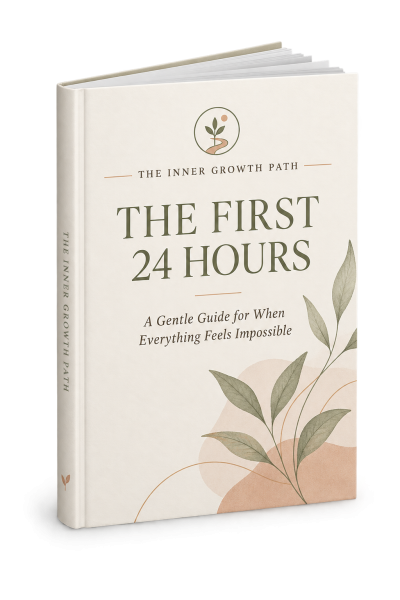
Start With the Next 24 Hours
If you feel too overwhelmed to think about identity, purpose or the future, begin with something smaller.
What to Do When Your Life Falls Apart gives you a gentle plan for the next 24 hours—without asking you to solve everything at once.
Free download · Gentle and practical · Educational—not therapy