


Written by Sarah ‘Sy’ Taylor
Former First Responder – Trauma-Informed Writer – Founder of The Inner Growth Path
Rebuilding identity after emotional collapse
A note before you continue: “Survival mode” is an informal description, not a clinical diagnosis. Persistent tension, sleep difficulty, agitation, concentration problems or an inability to relax can have psychological, physical, environmental or medication-related causes. This article provides trauma-informed education and lived experience—not individual medical advice.
There can be a confusing gap between what you know and what you feel.
You look around and recognise that nothing dangerous is happening. The difficult relationship has ended. You have left the high-pressure environment. The immediate crisis has passed. Yet your body remains tense, your attention keeps searching for problems and genuine rest feels strangely difficult.
You may feel exhausted but unable to switch off. A noise makes you jump. Silence feels uncomfortable. You keep preparing for demands that have not arrived—or find yourself monitoring other people’s moods, messages and behaviour.
Experiences like these are often described informally as “survival mode.” They can develop during trauma or prolonged stress, but they are not proof of trauma or PTSD. Anxiety, disrupted sleep, ongoing environmental stress, physical-health conditions, medication effects and stimulant use can produce overlapping symptoms.
The purpose of this article is not to diagnose the cause. It is to help you understand what persistent threat-related reactions can feel like, why calm surroundings do not always produce immediate calm inside you and when additional support may be appropriate.
THE SHORT ANSWER
Survival mode is an informal term for persistent protective reactions such as feeling tense, watchful, easily startled, unable to settle, driven to keep moving or uncomfortable when you stop.
These reactions can continue after prolonged stress because the brain and body may respond automatically to reminders, uncertainty or learned patterns of threat. However, “survival mode” is not a diagnosis, and similar symptoms can occur for several reasons. Persistent, severe or worsening symptoms deserve appropriate professional assessment.
What “Survival Mode” Actually Means
“Survival mode” is an informal term people often use when protective reactions continue dominating their attention, emotions or behaviour.
You may remain watchful, tense or easily startled. Your mind searches for what could go wrong. Rest feels uncomfortable, concentration becomes difficult and ordinary uncertainty can feel disproportionately threatening.
These reactions are not necessarily conscious choices. The brain and body can respond automatically to reminders, learned associations, unpredictability or signs that resemble previous danger.
In PTSD, persistent tension, hypervigilance, sleep disruption, irritability and an exaggerated startle response can form part of the arousal and reactivity symptom cluster. However, experiencing one or more of these symptoms does not establish PTSD or prove that trauma is their cause.
Anxiety conditions, ongoing stress, disrupted sleep, stimulant use, medication effects, physical illness and genuinely unsafe circumstances can produce overlapping experiences.
IMPORTANT: Survival mode describes an experience. It does not identify the cause, and it should not be used as a self-diagnosis.
FROM MY EXPERIENCE
What Persistent Alertness Felt Like for Me
When I look back on that period, survival mode did not feel like an abstract nervous-system idea. It felt physical.
There was a tightness in my chest that rarely disappeared. I often felt wired, alert and prepared for something to go wrong—even when I could not identify an immediate threat in front of me.
I remember being at work one day when something shifted. I became aware of a feeling in my body before I could explain it. It was not dramatic. It was a quiet but persistent sense that something was wrong.
At the time, I responded in the way I had learned to respond as a first responder: remain useful, keep functioning and continue through it. I did not yet have the language to separate an immediate danger from a body that had become accustomed to remaining on guard.
Later health checks also identified physical and nutritional concerns that required attention. That mattered because it reminded me not to attribute every physical symptom to trauma or stress alone. My psychological history was relevant—but it was not the only part of my health worth assessing.
Four Ways Survival Mode Can Show Up
1 — PHYSICAL ALERTNESS
Your Body Rarely Feels Fully Settled
You may experience muscle tension, shallow breathing, restlessness, a racing heart or an exaggerated startle response. Even while sitting still, part of you feels prepared to react.
NOTICE THIS
What happens in your body when the room becomes quiet and nothing requires your attention?
2 — THREAT MONITORING
Your Attention Keeps Searching for Problems
You may scan facial expressions, messages, noises or changes in another person’s mood. Ambiguity is difficult because your mind quickly begins preparing for the least safe explanation.
Notice this
What information do you repeatedly check when you are trying to determine whether everything is okay?
3 — DIFFICULTY RESTING
Stopping Can Feel More Uncomfortable Than Continuing
Work, helping, planning or remaining busy may provide structure and temporary relief. When you stop, uncomfortable thoughts, sensations or uncertainty can become more noticeable.
Ask yourself
When I rest, do I experience relief—or guilt, agitation and an urge to become useful again?
4 — PROTECTIVE REACTIONS
Small Triggers Can Produce Large Protective Reactions
You may become defensive, withdraw, over-explain, appease another person or feel compelled to regain control. The reaction may make more sense when viewed as an attempt to prevent rejection, conflict, helplessness or further harm.
Notice this
What does my reaction appear to be trying to prevent?
If prolonged stress has reached the point where ordinary responsibilities feel impossible, you may find it helpful to read about the signs of emotional collapse and what to do first.
Why You Cannot Relax Even When Things Are Calm
Recognising that a situation is safe does not always create an immediate feeling of calm. Several different processes may contribute.
Present Cues Resemble Earlier Threats
A tone of voice, unanswered message, sudden noise or change in another person’s behaviour may resemble something previously associated with danger. The reaction can begin before you have consciously decided what the cue means.
Vigilance Has Become Familiar
During a prolonged crisis, watching closely, anticipating problems and remaining prepared may have been useful. When the situation changes, those habits do not necessarily disappear immediately.
Rest Removes Familiar Structure
Work, responsibility and helping other people can organise your attention. When those demands stop, previously unnoticed sensations, thoughts or exhaustion may become more visible. This can make rest initially feel uncomfortable rather than restorative.
The Cause May Not Be Trauma Alone
Sleep disruption, caffeine or stimulant use, medication effects, pain, hormonal or thyroid conditions, anxiety and ongoing life stress can contribute to physical tension and difficulty relaxing. An apparently calm room does not answer every question about what your body is experiencing.
Survival Mode, Anxiety, PTSD or Ongoing Stress?
These terms can overlap, but they are not interchangeable.
Survival Mode
An informal description for persistent protective reactions such as vigilance, tension, avoidance, agitation or difficulty settling. It is not a diagnosis.
Anxiety
An emotion and a feature of several recognised conditions. Anxiety can involve worry, fear, tension and avoidance, with or without a traumatic cause.
PTSD
A recognised mental-health condition involving a specific pattern of symptoms after exposure to trauma. It requires assessment; hypervigilance alone does not establish PTSD.
Ongoing Stress or Danger
Sometimes alertness is responding to current demands, instability, conflict or genuine risk. The appropriate response may involve practical safety, boundaries or environmental change—not merely learning to relax.
These experiences can overlap. An article or checklist cannot determine the cause of persistent alertness or replace an appropriate assessment.
What Most Advice Gets Wrong About Survival Mode
People who cannot relax are often told to calm down, think positively or stop worrying. The problem is not that thoughts are irrelevant. It is that instruction alone may not change an automatic reaction.
Telling yourself that nothing is wrong can become frustrating when your body remains tense. You may then judge yourself for failing to produce calm on demand.
Insight, cognitive approaches, physical regulation, practical safety, sleep, healthcare and supportive relationships can all matter. Different causes require different responses.
The more useful question is not, “Why can’t I make myself relax?” It is, “What appears to be maintaining this alertness—and what kind of support would address that?”
You do not need to prove that you are safe by forcing yourself to feel calm. Begin by noticing what your alertness responds to and whether the source is historical, current, physical—or a combination.
What Helped Me Begin Feeling Less Constantly on Guard
No single practice switched survival mode off. What helped was learning to recognise when I was reacting to the present and when an earlier experience was shaping what I expected to happen next.
Walking and spending time in calmer environments gave me space to notice what was happening without immediately forcing an explanation. Safe people mattered because I did not have to remain as defended or carefully controlled around them.
Professional support helped me understand PTSD and patterns that I could not resolve through insight alone. Medical assessment also mattered because some of my exhaustion and physical symptoms needed more than a psychological explanation.
Most importantly, I stopped treating every protective reaction as evidence that I was weak, broken or failing. Understanding the reaction did not solve everything—but it gave me a more compassionate place from which to respond.
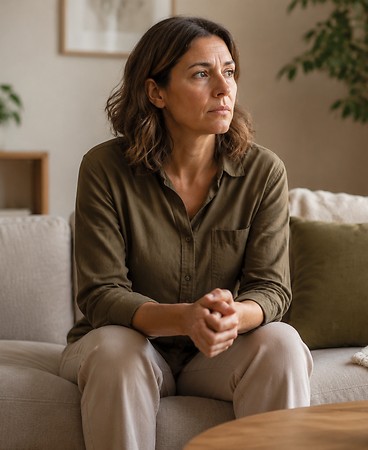
When Remaining on Guard Changes How You See Yourself
Persistent alertness can affect more than your ability to relax. You may begin seeing yourself as anxious, difficult, controlling, overly sensitive or incapable of coping.
But a protective reaction is not your complete identity.
The goal of understanding survival mode is not to make it another permanent label. It is to recognise what you have been doing to remain protected, identify what is still needed and create space for responses that fit your present life more accurately.
Continue understanding: If you no longer recognise your personality, confidence or sense of self, read Identity Loss After Trauma.
When Survival-Mode Symptoms Need Additional Support
Consider speaking with a GP or appropriately qualified mental-health professional if persistent alertness, anxiety or difficulty relaxing:
- continues for several weeks without improving
- disrupts sleep, work, relationships or basic self-care
- involves intrusive memories, nightmares or avoidance
- causes frequent panic or intense physical symptoms
- leads to increased alcohol or substance use
- began after starting or changing medication
- occurs alongside unexplained pain, palpitations, breathlessness or other physical symptoms
Seek urgent local support if you may harm yourself, cannot remain safe or are unable to care for your immediate needs. In Australia, call 000 in an emergency or Lifeline on 13 11 14.
Frequently asked questions


Need Something Gentler Before You Continue?
If this article has helped you recognise what changed but you still feel overwhelmed, the free Emotional Recovery Starter Guide will help you identify where you are now and choose one manageable next step.
Free download • Gentle and practical • Educational—not therapy