
If you’ve been feeling anxious, shut down, overwhelmed, or like you don’t recognise yourself anymore, there’s a reason for that.
And it’s not because you’re broken.
It’s because your nervous system has been under more stress than it knows how to process.
I’ve broken this down more deeply in Nervous System Regulation: A Trauma-Informed Guide to Healing When Your Whole Life Falls Apart, but in this article, I want to help you recognise the signs, because awareness is where this starts.
If You’re Asking These Questions, You’re in the Right Place
If you’ve been asking yourself:
- “Why do I feel anxious for no reason?”
- “Why do I shut down emotionally?”
- “Why do I feel numb and disconnected?”
- “Why can’t I focus or think clearly?”
- “Why do I overreact to small things?”
…you’re not alone.
And more importantly:
there’s nothing wrong with you.
These are all signs your nervous system may be dysregulated.
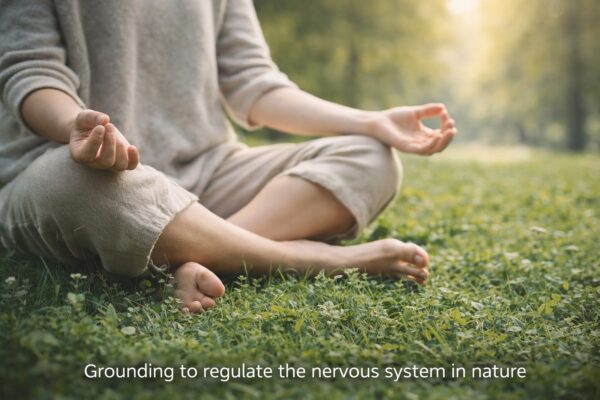
For me, I can look back now and see the signs were there for a long time. But it actually took doing the work, learning tools, grounding myself, and developing real self-awareness, to understand what was happening.
That piece matters more than people realise.
Self-awareness. Accountability. Responsibility.
That’s what allows you to actually look at yourself, and your shadows, without running.
When did I really feel something was off?
It was when I started trying to connect with people again. Especially in romantic relationships. Any shift, any inconsistency, anything that felt even slightly unsafe… my body reacted.
Not just mentally, physically.
Anxiety. Stress. A sense of being on edge.
It made it hard to relate. Hard to feel safe. Hard to just be.
What Is Nervous System Dysregulation?
At its core, nervous system dysregulation means your body is stuck in survival mode.
It’s not a mindset issue.
It’s not a personality flaw.
It’s physiological.
When you’ve experienced trauma, chronic stress, or emotional instability (like betrayal or unsafe environments), your body learns to stay alert.
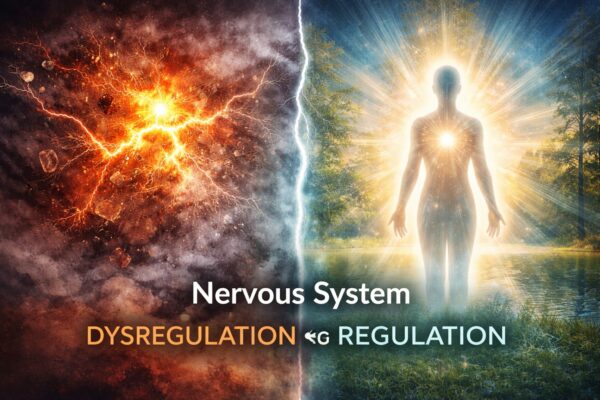
Even when the danger is no longer there.
Looking back, I can see this clearly now.
Before I did any real work, before therapy, my body was completely shut down.
I was:
- emotionally numb
- dissociated
- disconnected from people and reality
I remember thinking I didn’t belong here. Like I was in the wrong timeline.
It was confusing. Heavy. And honestly, scary.
My anxiety got so intense I was having panic attacks.
There were times I couldn’t even leave the house.
That wasn’t weakness.
That was a nervous system overwhelmed and trying to cope.
More on that here: 👉 “Why PTSD Changes You (And Why You Don’t Recognise Yourself)
7 Signs Your Nervous System Is Dysregulated
1. You Feel Anxious “For No Reason”
This is one of the most common signs.
A constant underlying anxiety.
A sense that something isn’t right, even when nothing is wrong.
What’s actually happening:
Your nervous system doesn’t feel safe, so it stays in a fight-or-flight response.
What helps:
- slow breathing (long exhales)
- reducing stimulation (noise, phone, chaos)
For me, anxiety feels like a tight chest and a constant scanning.
Like I’m waiting for something to go wrong.
2. You Overreact to Small Things
You know it’s not a big deal…
but your reaction says otherwise.
What’s happening:
Your body is responding to stored stress, not just the present moment.
I remember reading something that stuck with me:
👉 If you’re overreacting in the present, it’s often the past showing up.
That hit.
Because when I really looked at it:
what was happening didn’t match the intensity of my reaction.
3. You Shut Down Emotionally
You withdraw.
You go quiet.
You disconnect.
This is the freeze response.
Not avoidance.
Protection.
What helps:
- gentle movement (walking, stretching)
- slowly re-engaging (not forcing yourself)
4. You Feel Numb or Disconnected
This one is hard to explain unless you’ve felt it.
It’s not sadness.
It’s nothing.
Flat. Detached. Not fully here.
I’ve had moments where I felt completely disconnected from myself and reality.
Like I was watching my life instead of living it.
That’s your nervous system trying to protect you from overwhelm.
5. You Can’t Focus or Think Clearly
Brain fog.
Forgetfulness.
Struggling to communicate.
When your body is in survival mode, it doesn’t prioritise thinking.
It prioritises safety.
What helps:
- simplify everything
- regulate first, then think
6. You Feel Constantly Exhausted
This isn’t just being tired.
It’s:
- drained
- heavy
- emotionally and physically depleted
Your nervous system has been “on” for too long.
And eventually… it crashes.
7. You Don’t Feel Like Yourself
This is the one people struggle to put into words.
You don’t recognise yourself anymore.
Your reactions feel different.
Your identity feels unstable.
But here’s the truth:
You haven’t lost yourself.
our nervous system is just stuck.
🔗 Deep dive into this here:
👉 Window of Tolerance Explained Simply (Why You Feel Overwhelmed or Shut Down)
👉 When You Look Calm but Your Body Is at War: A Personal Moment With PTSD That No One Saw
Why This Is Happening
There was a moment where it clicked for me.
I realised…
my reactions weren’t about the present.
They were coming from somewhere deeper.
Because the situation didn’t justify the reaction.
And when I looked at it honestly,
I wasn’t actually unsafe anymore.
But my body thought I was.
That’s what dysregulation is.
Your body reacting to the past,
while you’re living in the present.
How to Regulate Your Nervous System
1. Regulate the Body First
- breathwork
- grounding
- cold water
- movement
You can’t think your way out of this.
2. Create Safety
This one surprised me the most.
What actually helped?
Being around safe, regulated people.
People who:
- take accountability
- don’t control
- can communicate clearly
That changed everything.
3. Stop Forcing Yourself to Push Through
Pushing through keeps you in survival.
Regulation requires:
👉 pausing
👉 listening
👉 slowing down
4. Build Daily Regulation Habits
- morning sunlight
- movement
- less overstimulation
Consistency matters more than intensity.
If you’re going through a breakup and need extra insight, read this article:
👉 How to Heal After a Breakup- 7 simple steps. A Reality-Based Guide (Not Fast Fixes)
How Long Does It Take to Regulate?
This is the honest answer:
It’s not instant.
It depends on:
- your history
- your environment
- your consistency
For me, I’m still on the journey.
I still experience dysregulation.
I still have PTSD symptoms.
But therapy gave me tools.
And what I’ve realised is this:
Cognitive understanding helped
but somatic work changed things
That’s the next level for me.
You’re Not Broken
If someone said to me:
“I feel too much”
“I feel broken”
I’d say:
Yeah… I know you do.
Because everything in your body is telling you that.
You don’t recognise yourself.
You feel like something is wrong.
But you’re not broken.
You’re responding exactly how someone would
after what you’ve been through.
There’s something I come back to a lot:
Post-traumatic growth
What you’ve been through can break you…
or it can rebuild you.
It depends on how you choose to meet yourself now.
If this article resonates: Download my Nervous System Reset Guide (free)
FAQ:
How do I feel safe again after betrayal?
Start by rebuilding safety internally. Focus on grounding your body, creating stable routines, and surrounding yourself with emotionally safe people. External safety follows internal regulation.
How do I trust myself after trauma?
Trust is rebuilt through small, consistent actions. Notice when you honour your needs, set boundaries, and respond instead of react.
How do I expand my window of tolerance?
Gradual exposure to stress while staying regulated. Practices like breathwork, therapy, and somatic work help widen your capacity.
How do I stop reacting and start responding?
Pause. Regulate your body first. Then respond from awareness instead of emotion.
How do I regulate my nervous system daily?
Incorporate simple habits: movement, breathwork, sunlight, reduced stimulation, and consistent routines.
Recommended Tools
Books and tools that support nervous system healing
These are some of the resources I recommend if you’re learning about trauma, nervous system regulation, somatic healing, and deeper self-awareness. They’re gentle places to start if you want support beyond this article.
The Body Keeps the Score
Bessel van der Kolk
A foundational book for understanding how trauma lives in the body, affects the brain, and shapes the way we relate to ourselves and others.
Waking the Tiger
Peter Levine
A powerful introduction to trauma through a somatic lens, with insight into how the body stores survival energy and how healing can begin.
Explore this bookThe Untethered Soul
Michael Singer
A beautiful book for developing inner awareness, observing the mind, and creating more space between your triggers and your truth.
Explore this bookTrack and Transform
Somatic Tracking Journal
A helpful tool for noticing body sensations, emotional patterns, and nervous system shifts so you can build more awareness over time.
Explore this journalTrauma-Informed Journal
Guided shadow journal
A supportive prompt-based journal for reflection, emotional processing, and exploring your inner world with more honesty and compassion.
Explore this journalThis section contains affiliate links. If you purchase through these links, I may earn a small commission at no extra cost to you.