
STAGE 3 · RELEASE WORKBOOK
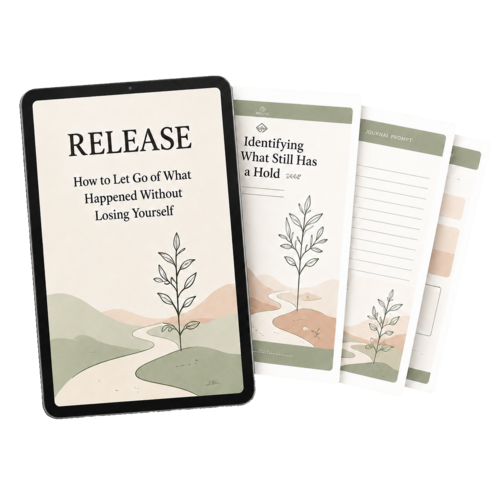
How to Let Go of What Happened Without Losing Yourself
A guided workbook in development for processing grief, loosening emotional attachment and making more space for your present life—without forcing forgiveness, forgetting or pretending that what happened was acceptable.
Join the wait-list to receive development updates and be the first to know when Release becomes available.
COMING SOON
This Workbook May Be for You If…
You may understand what happened and still feel emotionally organised around it. The following experiences can point towards something that remains unfinished—not a personal failure to “move on.”
You keep replaying conversations, decisions or details from the past.
You are waiting for an apology, explanation or acknowledgement.
You miss someone you know you cannot—or should not—return to.
You feel emotionally attached despite ending contact.
You are grieving a future that did not happen.
You are struggling to release a career, role or former version of yourself.
Letting go feels like excusing the harm or abandoning part of your story.
You want more space for your present life without erasing what the experience meant.
The Release Workbook is coming
Join the waitlist and I’ll send you What Am I Still Waiting For? — a free five-page reflection sheet you can use now.
It will help you identify the answer, acknowledgement or ending you may still be waiting for, and gently return some of your attention to the life in front of you.
No purchase is required to join the waitlist.
Three Forms of Release
Release is not limited to the end of a relationship. The workbook is being developed around three forms of emotional attachment, grief and identity change.
PATH 1
Releasing a Person or Relationship
Explore longing, no contact, emotional attachment and the parts of you that may still be waiting for someone to return, change or finally understand.
PATH 2
Releasing the Hold of What Happened
Work with mental replay, unanswered questions, injustice, anger and the need for an explanation, apology or different ending.
PATH 3
Releasing an Old Role or Version of Yourself
Process the loss of a career, responsibility, expected future or identity that once provided structure, meaning and recognition.
Release Without Forced Forgiveness
This workbook will not ask you to excuse harmful behaviour, pretend that the past no longer matters or manufacture gratitude for what hurt you.
It will help you identify what remains emotionally unfinished, recognise what you may still be waiting for and consider what you are ready to carry differently.
Acceptance can mean acknowledging reality as it is. It does not require approval, reconciliation, renewed contact or the removal of appropriate boundaries.
RELEASE DOES NOT REQUIRE
The aim is not emotional perfection. It is creating more space around what happened so it does not need to direct every part of your present life.
What Release Is Being Designed to Explore
The final structure is still being developed. Planned areas include:
Identifying What Still Has a Hold
Recognise where your attention, hope, identity or emotional energy remains tied to the past.
Understanding What You Are Waiting For
Explore the need for an answer, apology, acknowledgement, different ending or return to who you were.
Working With Grief and Conflicting Emotions
Make room for love, anger, sadness, relief and disappointment without demanding one simple emotional conclusion.
Interrupting Mental Replay
Notice when reflection becomes repetitive rumination and practise returning attention to present choices.
Separating Acceptance From Approval
Acknowledge what cannot be changed without excusing harm, removing boundaries or denying what the experience cost you.
Creating Space for What Comes Next
Consider what may become possible when less of your identity and attention must remain organised around what happened.
Planned content may be refined as the workbook develops.

FROM MY EXPERIENCE
Why I Am Creating Release
I know what it is to understand what happened and still feel emotionally organised around it.
The end of my marriage, the loss of my career in policing and the collapse of the future I expected did not create one simple form of grief. I was grieving a person, a role, a sense of safety and the version of myself I thought I would remain.
Understanding those losses helped, but understanding was not automatically the same as releasing them. I also needed to recognise what I was still waiting for, what I believed letting go would mean and which parts of my identity could continue without remaining defined by what had happened.
I am developing Release as a gentle, structured place for that reflection. It will not offer a perfect formula or ask you to rush your process. My intention is to help you approach what remains unfinished with more language, honesty and self-compassion.
Questions About the Release Workbook
A NOTE ABOUT SUPPORT
Reflection can bring difficult emotions, memories or questions into awareness. You do not need to process overwhelming experiences alone or continue an exercise that leaves you feeling more distressed, detached or unsafe.
If your symptoms are persistent, worsening or affecting your ability to function, consider support from an appropriately qualified health professional. Seek urgent local assistance if you cannot remain safe or require immediate medical help.