
Policing Through Innocent Eyes
Before I became a police officer, I thought I knew what I was signing up for. My dad wore the uniform before me. He filled my head with stories—funny, heroic, meaningful. I thought policing would be an adventure. A job where I could serve with integrity, make a difference, and be part of a tight-knit team.
And some of that was true.
But there was also another side. One I wasn’t prepared for—because no one really talks about it.
The Reality Behind the Badge
Movies make it look like police work is all car chases and catching bad guys. But the truth? Most days it’s paperwork. All kinds—domestic violence, mental health, court files, criminal briefs. We don’t just police—we fill the gaps left by other systems. We’re social workers, paramedics, crisis negotiators, grief holders.
The paperwork didn’t bother me. I was a law nerd who found pride in well-written statements. But I quickly learned this wasn’t the kind of job you could leave at the station.
The Day-to-Day: Controlled Chaos
No two days are ever the same. You start with a coffee and a task list, and then suddenly you’re racing to a crisis. Sometimes it’s slow. Other days you don’t even get to eat. Or pee. You’re called to people’s worst moments—car crashes, suicides, domestic violence, child abuse, death notifications.
And then you go home like nothing happened.
Except… it did.
The Trauma That Stays With You
The dead don’t haunt me. It’s the living—the mothers screaming, the children watching, the faces of people whose lives shattered in front of me.
Within months of joining, I’d experienced more trauma than most people see in a lifetime.
How do most cops cope? With alcohol. It’s the accepted way. After every shift—especially the bad ones—you go out for drinks. It’s normalised.
But alcohol doesn’t heal trauma. It avoids it. It delays the breakdown. It was only later I learned this truth: trauma demands to be processed, not drowned.
What Actually Helped Me Cope
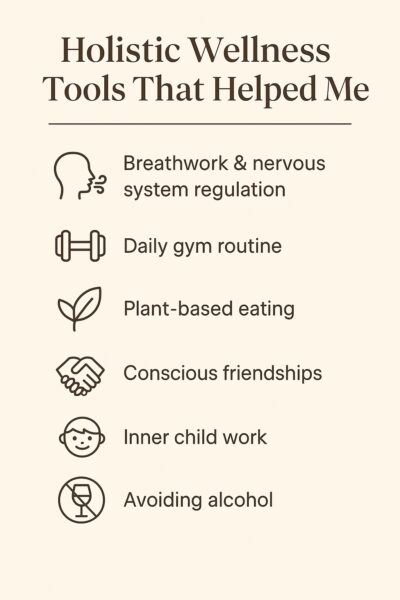
What saved me wasn’t booze. It was:
- Breathwork
- The gym
- A plant-based lifestyle
- Quality sleep
- Supportive relationships
- Sitting with myself. Facing my inner wounds.
This isn’t mainstream in policing, but it should be. Because if you don’t know who you are before the trauma, you’ll lose yourself in it.
Identity, Ego, and Emotional Intelligence
Being a police officer becomes your identity. You forget where the job ends and you begin. That uniform makes you feel invincible—but inside, it chips away at you.
To survive, I had to develop:
- Resilience
- Emotional intelligence
- Empathy
- The ability to stay calm under pressure
- A dark sense of humour (a survival skill in the job)
I had to learn to put my ego aside. To humanise people. To choose understanding over judgment.
The Hardest Parts No One Prepares You For
- Emotional exhaustion
- Shift work and burnout
- Exposure to constant trauma
- The feeling that no matter what you do, it’s never enough
But the worst part? It’s wondering if you did enough… then going home while someone else’s life will never be the same again.
“The hardest part isn’t what you see. It’s what you carry home with you.” — Former Police Officer
Work-Life Balance: A Myth?
People say, “Just leave work at work.”
That’s almost impossible in policing. You’re never really off duty. You start scanning crowds, picking up on risks, mentally rehearsing worst-case scenarios even at the supermarket.
You become hypervigilant. You lose sleep. You stop trusting people. And slowly, your worldview changes—sometimes permanently.
Advice to New Recruits: What I Wish I Knew
Here’s my truth:
- Don’t join unless you know who you are.
- Build your emotional resilience before the job does it for you.
- Don’t rely on unhealthy coping mechanisms.
- Get into a specialised area early—general duties is not sustainable long term.
- Know that this job will fundamentally change you. Make sure it doesn’t break you.
And don’t ignore the signs of burnout. No job—no uniform—is worth your mental health.
Would I Do It Again?
Yes. Absolutely.
Policing gave me a sense of purpose like nothing else. I made lifelong friends. I was there for people in their darkest moments. I helped. I served. I stood up for what was right.
But I also paid a price.
And now that I’m out of the job, I’m still healing. Still learning who I am without the badge.
Final Thoughts: Healing After the Uniform
If you’re reading this and you’re still in the job—or thinking about joining—ask yourself:
- Why do I want this?
- What am I trying to prove?
- What am I running from?
- Do I have healthy tools to process trauma?
If not, start building them now.
Because the job doesn’t just take bravery. It takes soul work.
“If you’re in or considering a career in frontline service, ask yourself: What are my current coping mechanisms? Do I know who I am outside of my role?”