
Volunteering for PTSD.
I invite you to look at this article for further reading: Nervous System Regulation: A Trauma-Informed Guide to Healing When Your Life Falls Apart (And Why You Can’t Relax)
Written by Sy — Founder of The Inner Growth Path
I write about what happens after emotional collapse — when your identity, your nervous system, and your sense of self no longer feel stable. My work combines lived experience, trauma-informed understanding, and practical tools to help you make sense of what you’re feeling — and rebuild from it.
If you feel disconnected, numb, or like you’ve lost your place in the world…
This might be the missing piece no one talks about.
When PTSD hits, it doesn’t just affect your thoughts—it disconnects you from people, purpose, and even yourself. You can feel like you’re just existing, not really in your life anymore.
And for me… volunteering became a way back.
👉 If this is you right now, start here → Emotional Recovery Starter Guide
What is PTSD-related disconnection?
PTSD-related disconnection is when your nervous system becomes so overwhelmed that it shuts things down to protect you.
This can look like:
- Emotional numbness
- Feeling detached from people
- Loss of purpose or identity
- Avoiding social situations
- Feeling like nothing really matters
From a trauma perspective (as explored by Bessel van der Kolk), this isn’t weakness, it’s your body trying to survive.
But the problem is… survival mode isn’t living.
Why PTSD makes you feel disconnected
When your nervous system is dysregulated, it prioritises safety over connection.
That means:
- Socialising feels overwhelming
- Trust feels unsafe
- Purpose feels out of reach
- You withdraw to cope
This is where most advice gets it wrong.
They tell you to:
- “Get out more”
- “Be social”
- “Push yourself”
But if your system doesn’t feel safe, that approach backfires.
What you actually need is low-pressure, meaningful connection.
For further reading: Nervous System Regulation: How to Get Out of Survival Mode (When You Can’t Relax)
Why volunteering helps PTSD (and why it worked for me)
Volunteering gave me something I didn’t realise I’d lost:
A sense of purpose without pressure.
I didn’t have to perform.
I didn’t have to socialise.
I didn’t have to be “okay.”
I just had to show up.
Why I chose an animal shelter
Let’s be honest, if you’re navigating PTSD, socialising can feel like a high-stakes mission.
So I chose something that felt:
- Calm
- Predictable
- Safe
For me, that was an animal shelter.
Being around animals gives me peace—not the Instagram kind…
The kind where your body finally exhales.
Animals don’t judge—they just are
I started volunteering years ago while I was still a police officer.
I needed to stay connected to service, but I also needed space from people.
And animals gave me that.
They are:
- Honest
- Present
- Unconditional
No games. No expectations.
Just connection.
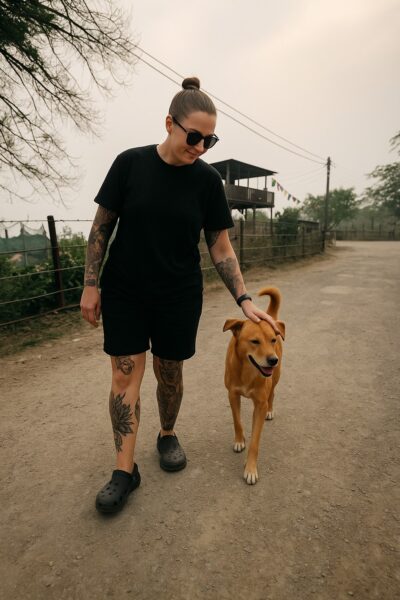
I don’t go to socialise, I go to be present
I spend half a day a week in the dog group.
I’m not there to talk.
I’m not there to impress anyone.
I’m there to:
- Sit
- Be still
- Offer calm
And somehow… I receive it back.
7 ways volunteering helps PTSD and emotional disconnection
1. It gives you purpose again
Even small acts of service remind you: you still matter
2. It reconnects you without pressure
You don’t have to “perform” socially
3. It regulates your nervous system
Calm environments (especially animals) reduce stress responses
4. It gets you out of isolation safely
You’re around life, but not overwhelmed by it
5. It rebuilds identity
You’re not just “someone with PTSD”—you’re someone contributing again
6. It brings you into the present moment
As Eckhart Tolle teaches—presence is where healing begins
7. It reminds you of simple connection
No overthinking. No analysing. Just being.
👉 If you feel stuck in survival mode, I created something to help → The Emotional Recovery Starter Guide
What I learned personally
Volunteering didn’t “fix” my PTSD.
But it gave me:
- A place to land
- A sense of meaning
- A connection that felt safe
And that was enough to start rebuilding.
Further reading: Why PTSD Changes You (And Why You Don’t Recognise Yourself Anymore)
What most advice gets wrong
Most advice pushes:
- Socialising
- Productivity
- “Getting back to normal”
But PTSD recovery isn’t about forcing yourself back into life.
It’s about finding your way back safely.
What actually helped me
- Choosing environments that felt calm
- Removing pressure to interact
- Letting presence be enough
- Staying consistent (even just a few hours a week)
That’s what created change.
How to start volunteering (without overwhelming yourself)
1. Choose something that feels safe
Animals, nature, quiet environments
2. Start small
Even 2–4 hours a month is enough
3. Remove pressure
You don’t have to talk or perform
4. Focus on presence, not productivity
You’re not there to “achieve” anything
5. Be consistent
Safety builds through repetition
6. Notice how your body responds
This is nervous system work—not just mindset
7. Let it evolve naturally
Don’t force connection—let it happen
Service is part of being human
Somewhere along the way, we’ve forgotten this.
Being of service isn’t:
- Performative
- A chore
- Something you “should” do
It’s actually how we reconnect to:
- Meaning
- Belonging
- Ourselves
As Carl Jung would say, healing often happens through reconnection with something greater than the self.
“In a world that feels disconnected, service is a return to the soul.”
Technology isn’t connection—presence is
I still scroll. I still disconnect.
But I can feel the difference now.
Real connection is:
- Sitting with my animals
- Being present with people I trust
- Showing up without distraction
That’s what brings me back.
A gentle nudge for you into volunteering for PTSD
If you feel:
- Lonely
- Disconnected
- Lost
Try being of service.
Not in a big way.
Not in a performative way.
Just in a real way.
You’re still:
- Needed
- Worthy
- Connected
You just haven’t felt it in a while.
👉 If you’re ready to rebuild yourself—not just understand this—start here → Emotional Recovery Starter Guide
FAQs about volunteering for PTSD
Does volunteering help PTSD?
Yes—research shows volunteering improves wellbeing, reduces depression, and increases life satisfaction.
Why do animals help with PTSD?
Animal interaction lowers cortisol, reduces stress, and creates safe emotional connection.
What type of volunteering is best for PTSD?
Low-pressure environments like animal shelters, nature-based work, or quiet community roles.
Can volunteering replace therapy?
No—but it can support healing alongside therapy and nervous system work.
How often should I volunteer?
Even a few hours a month can make a meaningful difference.
Scientific Backing & Resources:
1. Volunteering and Mental Health
- Volunteering is linked to lower depression, increased life satisfaction, and better wellbeing.
➤ Source: NIH – The Health Benefits of Volunteering
2. Animal Therapy and PTSD
- Interacting with animals has been shown to reduce cortisol (stress hormone) levels and lower blood pressure.
➤ Source: American Psychological Association – Animal-Assisted Therapy
3. The Healing Power of Purpose
- A strong sense of purpose is a protective factor against psychological distress.
➤ Source: Psychology Today – The Power of Purpose
Recommended Resources for PTSD Healing & Self-Connection
If you’re navigating PTSD or feeling disconnected, these are some of the resources that genuinely support nervous system healing, emotional processing, and identity rebuild.
-
The Body Keeps the Score – Bessel van der Kolk
A foundational book on how trauma lives in the body and how to begin healing.
View on Amazon -
Complex PTSD: From Surviving to Thriving — Pete Walker
A deeply validating guide for understanding trauma patterns and emotional recovery.
View on Amazon -
The iRest Program for Healing PTSD
A practical approach using yoga nidra and deep relaxation to regulate the nervous system.
View on Amazon -
Courage Self-Discovery Journal – Alexandra Elle
A gentle journaling guide to reconnect with yourself and process emotions safely.
View on Amazon -
Trauma-Informed Journal (Guided Shadow Journal)
A structured way to explore deeper emotional patterns and shadow work.
View on Amazon
*This post may contain affiliate links. If you choose to purchase through them, it helps support the work I do at The Inner Growth Path—at no extra cost to you.*