
Written by Sarah ‘Sy’ Taylor
Former First Responder – Trauma-Informed Writer – Founder of The Inner Growth Path
Rebuilding identity after emotional collapse
A NOTE ABOUT THE WORD “BURNOUT”
The World Health Organization describes burnout as an occupational phenomenon resulting from chronic workplace stress that has not been successfully managed. It is not classified as a medical condition.
People often use “burnout” more broadly to describe depletion caused by caregiving, relationships or life stress. Those experiences are real, but this article uses burnout specifically in relation to work. Similar symptoms may also involve depression, anxiety, trauma-related conditions, sleep problems, medication effects or physical-health concerns.
Source: World Health Organization—Burn-out as an occupational phenomenon
One of the most unsettling parts of burnout is not simply feeling tired. It is noticing that you no longer respond to work—or sometimes to the rest of your life—in the way you once did.
You may have been dependable, motivated and able to manage pressure. Now you feel irritable when someone asks for help. Your patience has shortened. You withdraw from colleagues, dread opening your email or feel detached from work that once mattered to you.
Outside work, you may have less energy for conversation, decisions, exercise, relationships or ordinary responsibilities. This can create a frightening conclusion:
“I don’t think I am the same person anymore.”
Burnout can affect your energy, attention, emotional availability and behaviour. Those changes can feel like personality changes, particularly when work has been central to your identity.
But a change in your present capacity is not necessarily a permanent change in who you are. Understanding what has altered—and what may be contributing to it—is more useful than treating burnout as your new personality.
THE SHORT ANSWER
Emotional numbness is a reduced ability to access or experience emotions. You may understand intellectually that something matters while feeling little emotional response.
Numbness can occur after trauma or prolonged stress, and it may appear alongside PTSD, depression, grief, burnout, dissociation, medication effects or physical-health concerns. It does not prove that you have stopped caring, and it does not establish one particular diagnosis.
If the change is persistent, worsening or affecting your relationships and daily functioning, appropriate professional assessment can help clarify what may be contributing to it.
What Burnout Actually Means
Burnout is not simply having a difficult week or needing a holiday. It refers to a pattern associated with chronic workplace stress that has not been successfully managed.
The World Health Organization describes three dimensions:
• energy depletion or exhaustion
• increased mental distance, negativity or cynicism towards your job
• reduced professional efficacy
These dimensions explain why burnout can feel like an identity change. You may no longer have the energy, emotional availability or confidence that previously shaped how you behaved at work.
Burnout does not mean that you have become lazy, uncaring or incapable. It also does not prove that work is the only factor affecting you. The term describes an occupational pattern—not the complete cause of every symptom or change in functioning.
IMPORTANT DISTINCTION
Burnout describes changes associated with chronic workplace stress. “Personality change” is the reader’s experience of feeling different—not a claim that burnout has permanently altered their personality.
Four Ways Burnout Can Change How You Show Up
Burnout may affect more than your feelings about work. When work has consumed much of your available capacity, the effects can become visible in your emotions, behaviour, relationships and sense of competence.
1 — EMOTIONAL CAPACITY
You Have Less Patience and Emotional Availability
You may become irritable more quickly, feel detached from other people’s concerns or have little capacity left for emotional conversation after work.
This can feel like becoming cold or impatient. It may instead reflect how little emotional energy remains available.
NOTICE
Does your patience change according to your workload, time away from work or opportunity to recover?
2 — MOTIVATION AND MEANING
Work No Longer Feels Like It Matters
Tasks that once created purpose, pride or satisfaction may begin feeling pointless. You may stop volunteering, contributing ideas or caring about outcomes that once felt important.
This increased distance or cynicism towards work is one of the central features associated with burnout.
NOTICE
Has your motivation disappeared everywhere—or primarily in relation to your job?
3 — CONNECTION AND WITHDRAWAL
You Pull Away From People
You may avoid colleagues, decline social plans or need more time alone. Even supportive relationships can feel like additional demands when your capacity is depleted.
Withdrawal can reduce immediate pressure, but prolonged isolation may also remove sources of support.
ASK YOURSELF
Am I choosing restorative space—or becoming increasingly cut off from people who usually help me feel like myself?
4 — CONFIDENCE AND IDENTITY
You No Longer Feel Like the Capable Person You Were
Reduced concentration, slower decisions, mistakes or difficulty managing ordinary tasks can affect how you see yourself.
If competence has been central to your identity, reduced professional efficacy may feel like losing an important part of who you are.
NOTICE
Am I treating a change in my current capacity as proof that I have permanently lost my capability?
Why Burnout Is Not Just a Personal Resilience Problem
Burnout is often presented as a failure to rest, set boundaries or practise enough self-care. That explanation can overlook the conditions creating the strain.
Individual coping strategies may help, but they cannot fully compensate for a workplace that repeatedly exposes someone to excessive or conflicting demands, poor support, traumatic material, bullying, low control or inadequate resources.
Burnout should not be framed as evidence that someone was not resilient enough. Work design, workplace culture, available resources and exposure to psychosocial hazards all matter.
Burnout, Emotional Exhaustion, Depression and Trauma
BURNOUT
An occupational phenomenon associated with chronic workplace stress. The central dimensions are exhaustion, increased distance or cynicism towards work and reduced professional efficacy.
Emotional exhaustion
Reduced emotional and mental capacity that may occur after many forms of prolonged demand, including—but not limited to—workplace stress.
TRAUMA-RELATED SYMPTOMS
May include intrusive memories, avoidance, persistent alertness, changes in mood or thinking and strong reactions to reminders. Occupational trauma and burnout can coexist, but they are not interchangeable.
Depression
A recognised mental-health condition that may include persistent low mood, loss of interest or pleasure, hopelessness, sleep or appetite changes, difficulty concentrating and impaired functioning across different areas of life.
These experiences can overlap. A website checklist cannot determine whether your symptoms are caused by burnout, depression, trauma, another health condition or several contributing factors.
Notice whether the changes are primarily connected to work or have spread across most areas of your life. Persistent, severe or worsening symptoms deserve professional assessment.
REFLECTION CHECK
A Reflection Check—Not a Burnout Test
Tick any statements that feel familiar. Notice whether the changes are mainly connected to work or now affect most areas of your life.
A pattern of work-related exhaustion, increasing distance or cynicism towards your job and reduced professional confidence may be consistent with burnout. This checklist cannot diagnose burnout or determine what is causing your symptoms.
If the changes are persistent, worsening or affecting life beyond work, consider speaking with a GP or appropriately qualified mental-health professional.
Based on the World Health Organization description of occupational burnout .
FROM MY EXPERIENCE
When Competence Became Part of My Identity
Policing taught me to function under pressure, remain useful and continue when emotion could not be the immediate priority. Competence was not merely something I valued at work—it became part of how I understood myself.
That made changes in my capacity difficult to accept. When concentration, patience and energy became less reliable, I did not initially see someone who had been operating under prolonged demand. I saw someone who was no longer disciplined or capable enough.
Leaving the work did not immediately restore the person I had been before it. There were also effects associated with PTSD, grief, physical health and major life change, so I could not accurately attribute everything I experienced to burnout alone.
What helped was separating my identity from my output. Being less able to perform under pressure did not erase my values, experience or character. It meant my capacity had changed—and that change deserved support rather than shame.
Questions to consider
• Are these changes strongest during work, before work or immediately after work?
• Do I feel noticeably different after genuine time away from the workplace?
• Have cynicism and emotional distance developed specifically towards my job?
• Has my confidence changed because work has become harder—or because I feel hopeless across most areas of life?
• What workplace conditions repeatedly consume the most energy?
• What support, control or resources are missing?
• Are sleep, physical health, medication, trauma or other stressors also affecting my capacity?
• Am I blaming my personality for changes that may need proper assessment and practical support?
These questions help you organise what you are noticing. They do not diagnose burnout or exclude another condition.
What to Do When Burnout Has Changed How You Feel
IDENTIFY WHAT IS WORK-SPECIFIC
Notice which symptoms appear in relation to your workplace, duties, people, schedule or level of responsibility. Record when they intensify and whether they change during genuine time away.
This helps distinguish a work-related pattern from symptoms that remain equally strong across every part of your life.
NAME THE WORKPLACE CONDITIONS
Identify the demands that are repeatedly exceeding your available resources.
Consider workload, control, support, exposure to distress, conflicting expectations, role clarity, staffing, recognition, fairness and your ability to recover between shifts or workdays.
SEEK PRACTICAL CHANGE—NOT ONLY PERSONAL COPING
Where it is safe and realistic, discuss priorities, workload, hours, responsibilities, resources or support with an appropriate supervisor, manager, union representative, human-resources contact or workplace health service.
Individual recovery practices cannot fully resolve an unchanged workplace hazard.
PROTECT THE CAPACITY YOU STILL HAVE
Reduce non-essential demands where possible. Create clearer boundaries around work contact, decision-making and availability.
Rest, sleep, movement, nutrition and supportive relationships matter—but they should support recovery rather than become another performance standard.
ARRANGE APPROPRIATE ASSESSMENT
Speak with a GP or qualified mental-health professional when changes are persistent, worsening or affecting your ability to function.
Assessment can explore depression, anxiety, trauma-related symptoms, sleep, medication effects, nutritional deficiencies and other physical-health factors rather than assuming burnout explains everything.
Does Your Personality Return After Burnout?
Many people regain energy, emotional range, patience and confidence when prolonged workplace strain is addressed and appropriate recovery becomes possible.
The process may not feel like returning to an identical former self. Burnout can expose limits, values and workplace conditions that you no longer want to ignore. Recovery may involve becoming clearer about what you can sustainably give rather than proving that you can tolerate the same demands again.
A gradual return of curiosity, connection, humour, motivation or interest can be meaningful. So can recognising that a particular role, workload or environment no longer fits.
Progress should not be measured only by how quickly you become productive again. A more useful question is whether you are regaining the capacity to participate in your life without continually overriding yourself.
RECOVERY IS NOT JUST RETURNING TO OUTPUT
Feeling better matters. Functioning matters. But recovery should not be reduced to becoming useful to the workplace again.
When Burnout Symptoms Need Additional Support
WHEN ADDITIONAL SUPPORT IS IMPORTANT
Consider speaking with a GP or appropriately qualified mental-health professional if changes in your energy, mood, behaviour or functioning:
• persist or continue worsening
• affect your ability to work or manage basic self-care
• extend well beyond the workplace
• include persistent low mood, hopelessness or loss of interest
• involve panic, intrusive memories, nightmares or significant avoidance
• include major changes in sleep, appetite, concentration or physical functioning
• began after starting or changing medication
• occur with unexplained pain, palpitations, breathlessness, dizziness or other physical symptoms
• lead to increased alcohol or substance use
Seek urgent local help if you are at risk of harming yourself or someone else, feel unable to remain safe or require immediate medical assistance. In Australia, call Triple Zero (000) in an emergency or Lifeline on 13 11 14.
Questions About Burnout and Personality Changes



IF EVERYTHING FEELS TOO MUCH RIGHT NOW
You Only Need to Begin With the Next 24 Hours
You do not need to rebuild your entire life today.
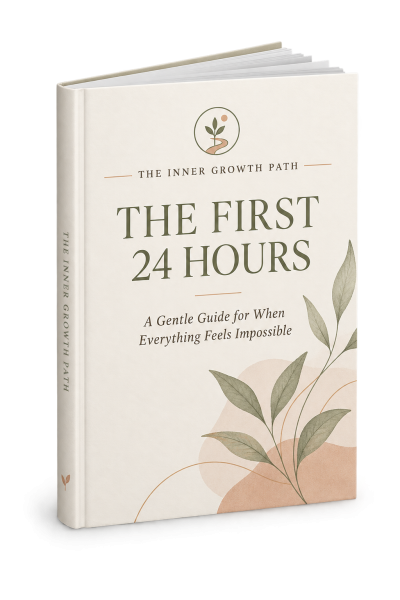
The free 24-Hour Emotional Recovery Starter Guide offers gentle, practical support for reducing immediate overwhelm, meeting basic needs and deciding what deserves your attention first.
Once the immediate shock becomes more manageable, you can begin considering what accountability, repair or separation would need to look like.