

Emotional Collapse: Signs and What to Do First
If everything feels too much and you are struggling to cope as usual, begin by recognising the signs and choosing one manageable next step.
A GENTLE REMINDER
You Do Not Need to Fix Everything Today
Stabilisation does not mean becoming completely calm or removing every symptom. It means reducing the pressure on your system enough to regain a little more orientation, capacity and choice.
Start with what feels manageable.
Regulation is not the same as forcing relaxation.
Professional support is appropriate at any stage.
Choose What You Need Right Now
You may recognise more than one of these experiences. Choose the starting point that feels most manageable today—you can return for the others later.

FOUNDATIONAL GUIDE
I’m Not Sure Where to Begin
Begin here if you move between anxiety, anger, numbness, restlessness or shutdown—or if you are unsure which kind of support may help.

PRACTICAL TOOLS
I Need Something Simple Right Now
Start here if you feel activated, tense, overstimulated or unable to settle and want several simple options you can try now.

WHEN EVERYTHING FEELS TOO MUCH
My Life Has Fallen Apart
Begin here if ordinary tasks feel impossible and you need a gentle framework for getting through the first days of emotional collapse.
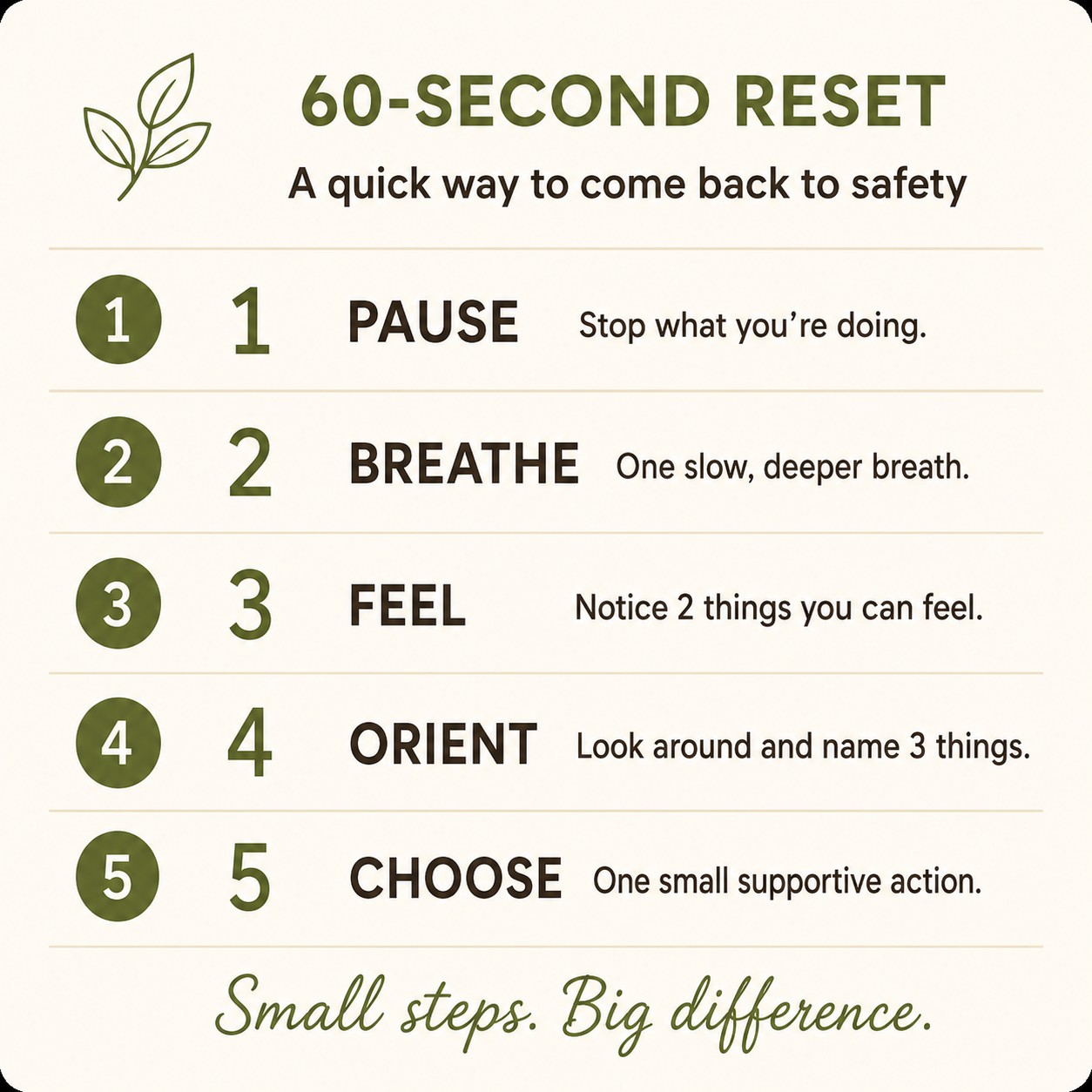
Need Something You Can Do Right Now?
If reading and decision-making already feel difficult, begin with one minute of orientation rather than another explanation.
Stage 1 is not a perfect routine. These principles can help you reduce avoidable strain while your capacity is limited.
Helpful During Stage 1
- Reducing non-essential demands
- Regular food, hydration, sleep and medication
- Brief grounding and orientation
- Supportive people and environments
- Consistency rather than intensity
Usually Unhelpful During Stage 1
- Forcing emotional breakthroughs
- Consuming endless healing information
- Treating rest as failure
- Comparing your recovery
- Expecting major decisions while overwhelmed
These are supportive principles, not rules or substitutes for individual medical or psychological advice.
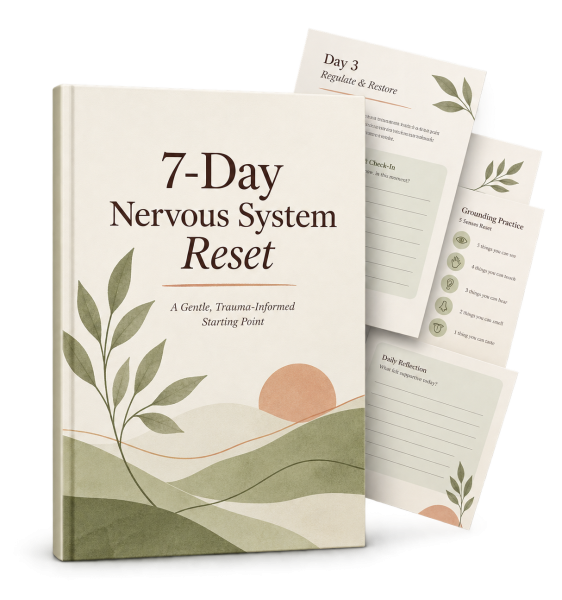
The Stabilisation Week
A 7-Day Emotional Reset
When your capacity is already limited, building a complicated recovery routine can become another source of pressure. The 7-Day Nervous System Reset gives you one gentle focus each day, helping you practise regulation without trying to change everything at once.
✓ One manageable focus for each day
✓ Gentle grounding and reflection practices
✓ Complete the guide at your own pace
Digital guide • Instant access • Complete at your own pace
Educational and reflective support only. This guide is not therapy, medical treatment or a substitute for professional care.
NEXT ON THE IDENTITY REBUILD PATH
When You Have More Capacity, Move Into Understanding
You do not need to feel completely healed before moving forward. Stage 2 may become useful when you have enough capacity to reflect on what happened, recognise recurring patterns and explore how your experiences have affected your identity.
NOT READY TO ANALYSE YET?
Need Something Gentler Before You Continue?
If this page has helped you recognise what may be happening but you still feel overwhelmed, What to Do When Your Life Falls Apart gives you a gentle plan for the next 24 hours—without asking you to solve everything at once.
Free download • Gentle and practical • Educational—not therapy