
If you’re a first responder and you don’t feel like yourself anymore…
but you can’t point to a single moment where everything “broke” — this is for you.
Because trauma in first responders doesn’t always look like trauma.
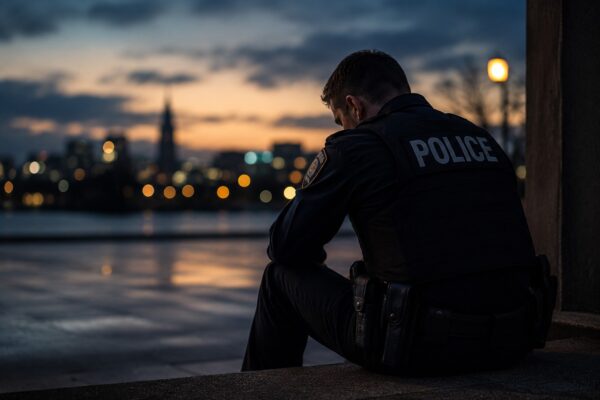
It doesn’t always come with breakdowns, tears, or obvious signs.
Sometimes, it looks like:
- Irritability
- Numbness
- Being constantly on edge
- Feeling disconnected from your life
And the hardest part?
You don’t realise it’s happening… until you’re already deep in it.
👉 If this is you, start here → Emotional Recovery Starter Guide
Further reading:
Nervous System Regulation: A Trauma-Informed Guide to Healing When Your Life Falls Apart (And Why You Can’t Relax)
What Is Trauma in First Responders?
Trauma in first responders is the cumulative impact of repeated exposure to high-stress, life-threatening, and emotionally intense situations — often combined with chronic suppression of emotional responses.
Unlike single-event trauma, this is:
- Gradual
- Layered
- Normalised
Research from experts like Bessel van der Kolk shows trauma isn’t just about what happened, it’s about what your body had to hold onto without release.
And in policing, paramedicine, and emergency services…
You’re trained to hold everything in.
“Trauma in this job doesn’t break you all at once — it slowly becomes who you are.”
Why Trauma Becomes “Normal” in This Job
This is where it gets dangerous.
Because trauma doesn’t feel like trauma at first — it feels like:
- “Just part of the job”
- “I’m handling it”
- “Everyone else is coping”
But underneath that…
Your nervous system is slowly shifting into survival mode.
Why Trauma in First Responders Doesn’t Look Like Trauma (PTSD Signs Explained)
- Your body stays in fight-or-flight
- You suppress emotional processing
- You disconnect from your internal signals
- You override stress instead of resolving it
Over time, this creates:
- Chronic hypervigilance
- Emotional numbness
- Burnout
- PTSD
Experts like Peter Levine explain that trauma isn’t the event, it’s the unreleased survival energy stuck in the body.
And first responders?
They don’t get the chance to release it.
When the role of being capable, composed and strong begins to collapse, recovery becomes more than managing PTSD symptoms. It becomes the work of rebuilding your identity beyond the uniform.
Signs Trauma in First Responders Is Taking Over
You might not call it trauma.
But it can look like:
- Feeling constantly on edge, even off duty
- Snapping easily or feeling irritable
- Emotional numbness or detachment
- Trouble sleeping or switching off
- Flashbacks or intrusive thoughts
- Panic attacks or anxiety spikes
- Feeling disconnected from loved ones
- Losing interest in things you used to enjoy
Further reading:
Nervous System Regulation: How to Get Out of Survival Mode (When You Can’t Relax)
The Mask First Responders Learn to Wear
This is the part most people don’t talk about.
You don’t just experience trauma.
You learn to hide it.
You become:
- The strong one
- The reliable one
- The one who never breaks
Even when you’re struggling internally…
You show up anyway.
Carl Jung would call this the persona, the mask we wear to function in the world.
Carl Jung believed that what we suppress doesn’t disappear, it builds in the shadow.
And in this job?
That shadow gets heavy.
Why Suppression Makes PTSD Worse
Suppression is rewarded in emergency services.
You get praised for:
- “Holding it together”
- Going back to work quickly
- Not reacting emotionally
But what’s actually happening is:
You’re training your nervous system to ignore distress signals.
And eventually…
It stops asking nicely.
This is when PTSD shows up:
- Panic attacks
- Dissociation
- Flashbacks
- Constant alertness
More reading:
How to Calm Your Nervous System Fast (10 Simple Ways That Actually Help When You Feel Overwhelmed)
The Culture Problem No One Wants to Admit
Let’s be honest.
The system still struggles with this.
There’s:
- Stigma
- Shame
- Fear of being seen as “weak”
- Fear of being labelled a liability
You’re told to be strong.
Until you can’t be anymore.
And then suddenly…
You’re “too much risk.”
7 Ways to Start Reclaiming Yourself After Trauma
This is where things shift.
Not through pushing harder — but through coming back to yourself.
1. Acknowledge what you’re feeling
Stop minimising it. If it’s affecting you, it matters.
2. Learn how your nervous system works
Understanding trauma changes everything.
3. Stop glorifying suppression
Strength isn’t emotional shutdown.
4. Create safe emotional outlets
Talking, journaling, therapy, expression matters.
5. Reconnect with your body
Breathwork, movement, grounding — this is where trauma lives.
6. Build safe relationships
You need people who can actually hold space for you.
7. Get professional support early
Don’t wait until breaking point.
👉 If you feel stuck in this cycle, I created something to help you break it…
Emotional Recovery Starter Guide
Personal Insight about Trauma in First Responders
This didn’t hit me all at once.
It crept in.
At first, I thought I was fine.
I told myself I was resilient.
But over time…
I became:
- Irritable
- Disconnected
- Constantly on edge
I was never off duty, even when I wasn’t in uniform.
And the hardest part?
No one noticed.
Not even the person closest to me.
Looking back now, I can see it clearly:
I wasn’t coping.
I was suppressing.
And that suppression became my identity.
What Most Advice Gets Wrong
Most advice says:

- “Talk about it”
- “Take time off”
- “Practice self-care”
But it misses the core issue:
Trauma in first responders isn’t just emotional, it’s physiological.
Your nervous system has been trained into survival mode.
And you can’t think your way out of that.
What Actually Helped Me
- Understanding trauma science
- Learning nervous system regulation
- Reconnecting with my body
- Choosing emotionally safe relationships
- Stopping the need to be “the strong one”
As Eckhart Tolle talks about, healing begins when you stop resisting what is.
“Bravery is not the absence of fear. It’s feeling the fear and showing up anyway.”
— Brené Brown
Trauma in First Responders: Identity Rebuild
Trauma doesn’t just affect how you feel.
It affects who you become.
Also read:
Shadow Work Safely: A Trauma-Informed Guide to Meeting Your Hidden Self
Because at some point, you’re not just healing trauma…
You’re rebuilding identity.
What I Want Every First Responder to Know
You are not weak.
You are not broken.
You are human.
And no job is worth losing yourself.
You matter more than:
- The badge
- The expectations
- The image of being “strong”
Final thoughts:
If you’re ready to rebuild yourself — not just understand this — start here:
👉 Emotional Recovery Starter Guide
FAQs about trauma in first responders
What does trauma look like in first responders?
It often shows up as irritability, numbness, hypervigilance, and emotional disconnection rather than obvious breakdowns.
Why do first responders suppress trauma?
Workplace culture rewards emotional control and resilience, leading many to ignore or suppress distress.
Can PTSD develop slowly?
Yes. Repeated exposure to stress can lead to cumulative trauma that builds over time.
Why can’t I relax even when I’m safe?
Your nervous system may be stuck in survival mode, keeping your body on high alert.
How do first responders start healing trauma?
Through nervous system regulation, safe relationships, therapy, and reconnecting with their body.
Recommended Trauma Recovery Resources
Healing from trauma is not about finding one magic answer. It is often about building a small, supportive toolkit that helps you understand what has happened, regulate your nervous system, and slowly come back to yourself. These are books and tools I recommend for trauma recovery, PTSD support, nervous system regulation, sleep, reflection, and emotional processing.
The Body Keeps the Score – Bessel van der Kolk
A powerful starting point for understanding how trauma lives in the body, not just the mind. This book helps explain why trauma symptoms can feel physical, emotional, and deeply confusing.
View on AmazonComplex PTSD: From Surviving to Thriving – Pete Walker
A deeply validating book for anyone who feels stuck in survival mode, emotional flashbacks, shame, people-pleasing, or long-term trauma patterns.
View on AmazonThe iRest Program for Healing PTSD
A gentle resource for using Yoga Nidra, meditation, and deep relaxation to support PTSD recovery and calm the nervous system.
View on AmazonTrauma-Informed Journal
A guided shadow journal can help you process emotions, notice patterns, and safely explore the parts of yourself that may have been buried during survival mode.
View on AmazonWeighted Blanket
Weighted blankets may support sleep regulation by creating a sense of pressure and containment, which can feel calming for an activated nervous system.
View on AmazonDreamegg White Noise Machine
Helpful for creating a more predictable sleep environment, especially if your nervous system is easily startled by sudden noises or silence feels unsettling.
View on AmazonBlue-Light Blocking Glasses
A simple sleep hygiene tool that may help reduce evening light exposure and support your body’s natural wind-down rhythm before bed.
View on AmazonMagZorb Magnesium Glycinate
Magnesium glycinate is often used to support relaxation, muscle tension, and sleep routines. Always check with your doctor before adding supplements.
View on AmazonSony WH-CH720N Noise Cancelling Headphones
Noise-cancelling headphones can be useful for reducing sensory overload, creating quiet, and supporting grounding when your nervous system feels overwhelmed.
View on AmazonSome links may be affiliate links, which means I may earn a small commission if you purchase through them, at no extra cost to you. These resources are shared as supportive tools and are not a replacement for professional mental health care.