THE IDENTITY REBUILD PATH

Stage 2 —
Understand

Once the nervous system begins to stabilise, many people naturally begin asking deeper questions.

Why does my body still react as though I am unsafe?

Why do I keep repeating the same relationship patterns?


Why don’t I feel like myself anymore?


Stage 2 helps you understand what your nervous system, emotions, relationships and identity have been carrying—without turning your pain into evidence that something is wrong with you.

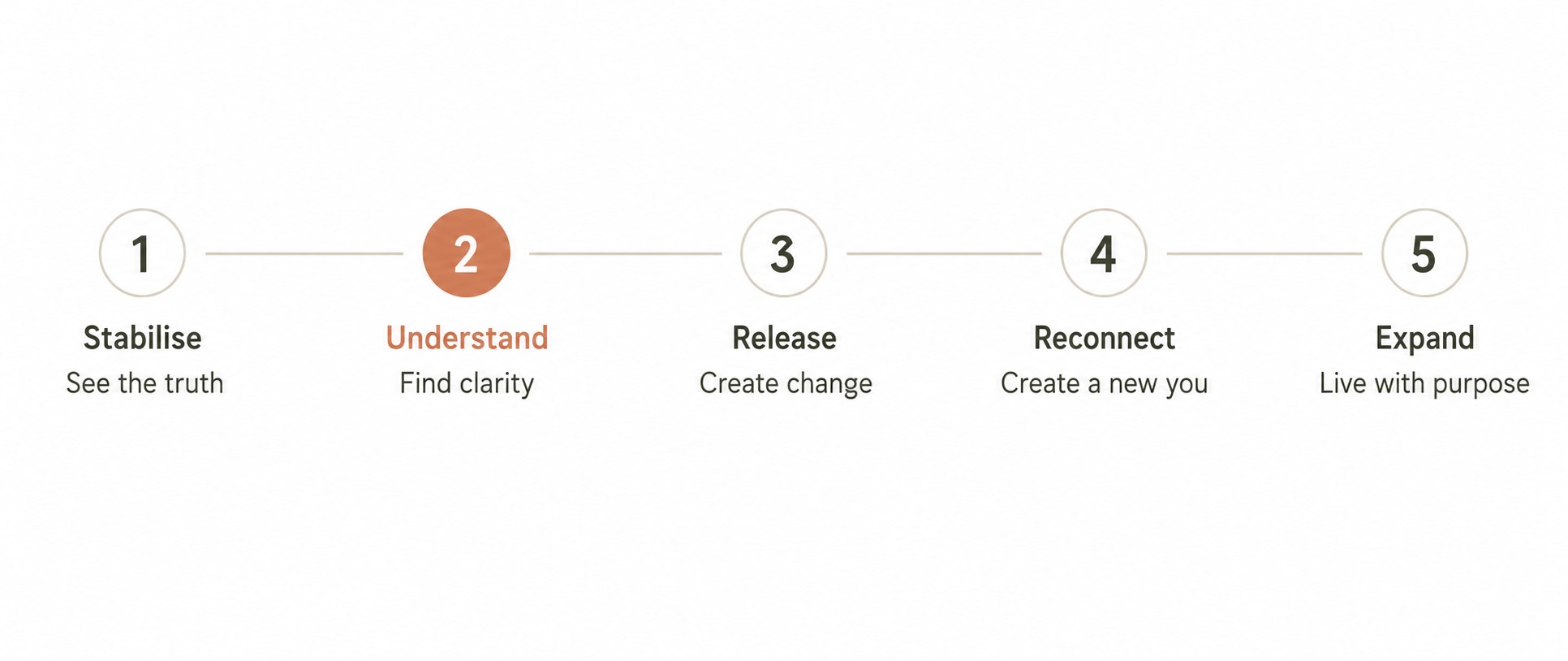
Five-stage growth pathway from Stabilise to Expand, with Stage 2: Understand highlighted.

What Does “Understand” Mean?

Understanding is about getting curious, not critical. It is where you explore how past experiences shaped your beliefs, habits, emotions and relationships, so you can stop blaming yourself and begin healing.

The goal of understanding is clarity, not rumination.

Signs You May Be in the Understanding Stage
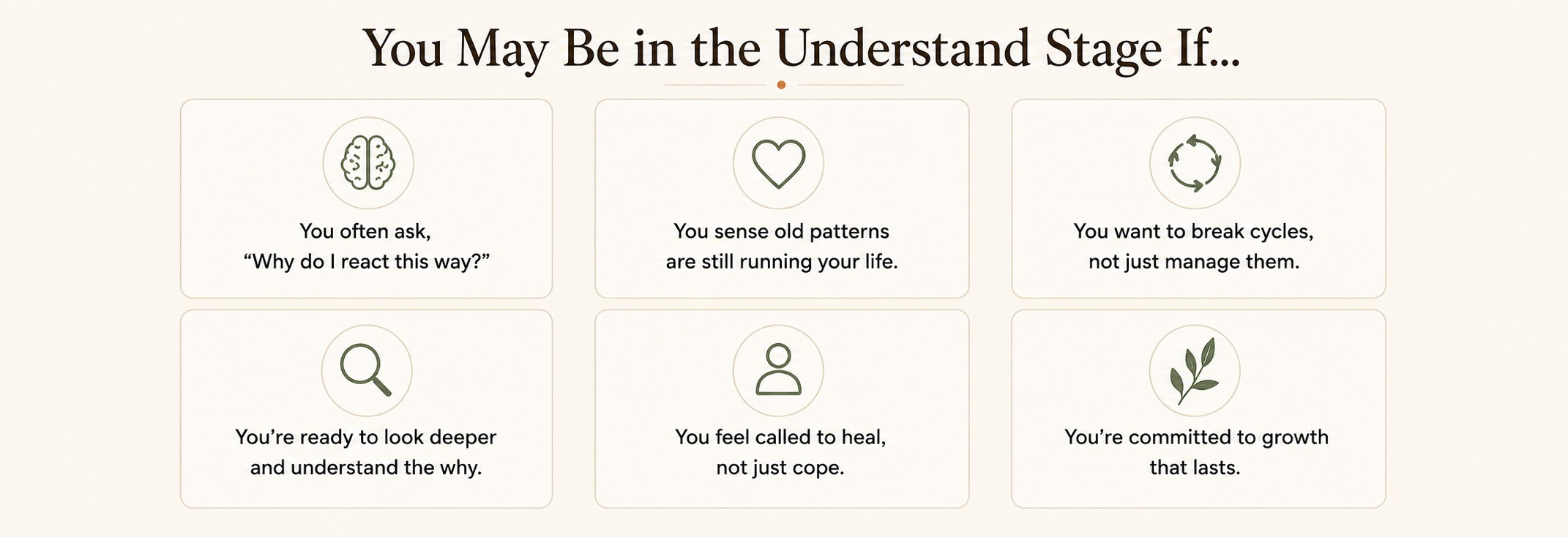
Constant self-reflection

You keep trying to understand what happened and why you changed.

Hyper-awareness of emotions

You notice your nervous system, triggers, reactions, or emotional patterns more deeply.

Obsessive overthinking

Your brain constantly searches for clarity, meaning, or answers.

Identity questioning

You begin questioning who you are beneath survival mode.

Emotional pattern recognition

You start noticing recurring relationship, emotional, or behavioural patterns.

Wanting deeper understanding

Surface-level advice no longer feels enough.

Increased emotional awareness

You understand your reactions more, even if they still feel intense.

Desire to rebuild differently

You no longer just want relief — you want clarity and lasting change.

Understanding Trauma Responses, Relationship Patterns and Identity Loss

How to understand without getting stuck

understanding your nervous system
emotional awareness
reducing self-blame
trauma education
recognising survival patterns
compassionate self-reflection
journaling and processing
learning emotional language
safe curiosity over judgement
obsessively analysing everything
consuming overwhelming healing content
turning healing into perfectionism
comparing your recovery
forcing breakthroughs
using awareness to shame yourself
staying stuck in “why me?”
expecting instant answers

Choose what you need to understand

You do not need to understand everything at once. Begin with the question that most closely matches what you are experiencing now.

NOT READY TO ANALYSE YET?

If You Feel Too Overwhelmed to Understand What Happened

Stage 2 asks you to notice patterns and make sense of your experience. If you currently feel flooded, panicked, shut down or unable to concentrate, return to Stage 1 and begin with stabilisation.

STAGE 2 PATH A

I Need to Understand My Nervous-System Responses

Start here if you feel constantly activated, numb, exhausted, hypervigilant or unable to relax even when the immediate danger has passed.

Woman wrapped in a blanket representing nervous system regulation after trauma.

Why You Feel Emotional Numbness After Trauma

Understand why overwhelming stress can reduce access to your emotions—and why feeling numb does not mean you have stopped caring.

five stones at a quiet beach understanding yourself

What Survival Mode Really Is

Understand hypervigilance, nervous-system dysregulation and why relaxing can feel difficult even when you are safe.

Woman resting both hands over her heart in a calming, self-soothing gesture.

Emotional Exhaustion After Trauma

Understand why prolonged stress can leave you feeling numb, disconnected and completely depleted.

STAGE 2 PATH B

I Need to Understand My Heartbreak and Relationship Patterns

Start here if you are trying to understand why a relationship changed, why being chosen felt so important or why similar emotional dynamics keep repeating.

Cracked heart-shaped stone on a beach representing heartbreak and emotional healing.

Understand what can become visible when early attraction settles and the real relationship begins taking shape.

Dried lotus flowers symbolising emotional healing, personal growth and transformation.

Explore the emotional patterns that can quietly damage connection before either person fully recognises them.

the clear path forward the inner growth path

Explore the difference between healthy connection and the fear, dependency or intensity that can sometimes feel like love.

STAGE 2 PATH C

I Need to Understand Why I Don’t Feel Like Myself

Start here if trauma, heartbreak, burnout or prolonged stress has left you disconnected from your personality, confidence or sense of identity.

Woman sitting beside a mountain lake reflecting on healing and personal growth.

Understand why trauma can alter your sense of self and leave you feeling like a different person.

Distressed woman sitting by a window representing emotional overwhelm and trauma.

Understand how trauma and survival responses can create emotional distance from your body, feelings and identity.

Winding country path beside a solitary tree symbolising healing and moving forward.

Understand why prolonged stress and burnout can change your energy, confidence, emotional range and sense of self.

Understanding Should Reduce Shame—Not Increase It

Many people spend years believing they are broken, weak, dramatic, lazy or “too emotional.”

Understanding trauma, heartbreak, survival responses and identity loss can change that story. Your reactions may make sense in the context of what you have experienced, even when those reactions are no longer helping you.

The purpose of Stage 2 is not to give pain a permanent place in your identity. It is to understand yourself well enough to begin choosing what comes next.

What Comes After Understand?

Understanding is not the final stage of healing.

Once you can name what happened, recognise your protective patterns and separate your identity from your pain, you may become ready to release what you no longer need to carry.

Stage 3 will focus on grief, emotional processing, letting go and making space for reconnection. Until that page is ready, continue with the Stage 2 pathway that best matches what you need to understand now.

Scroll to Top